Lochside Pollinator Meadow
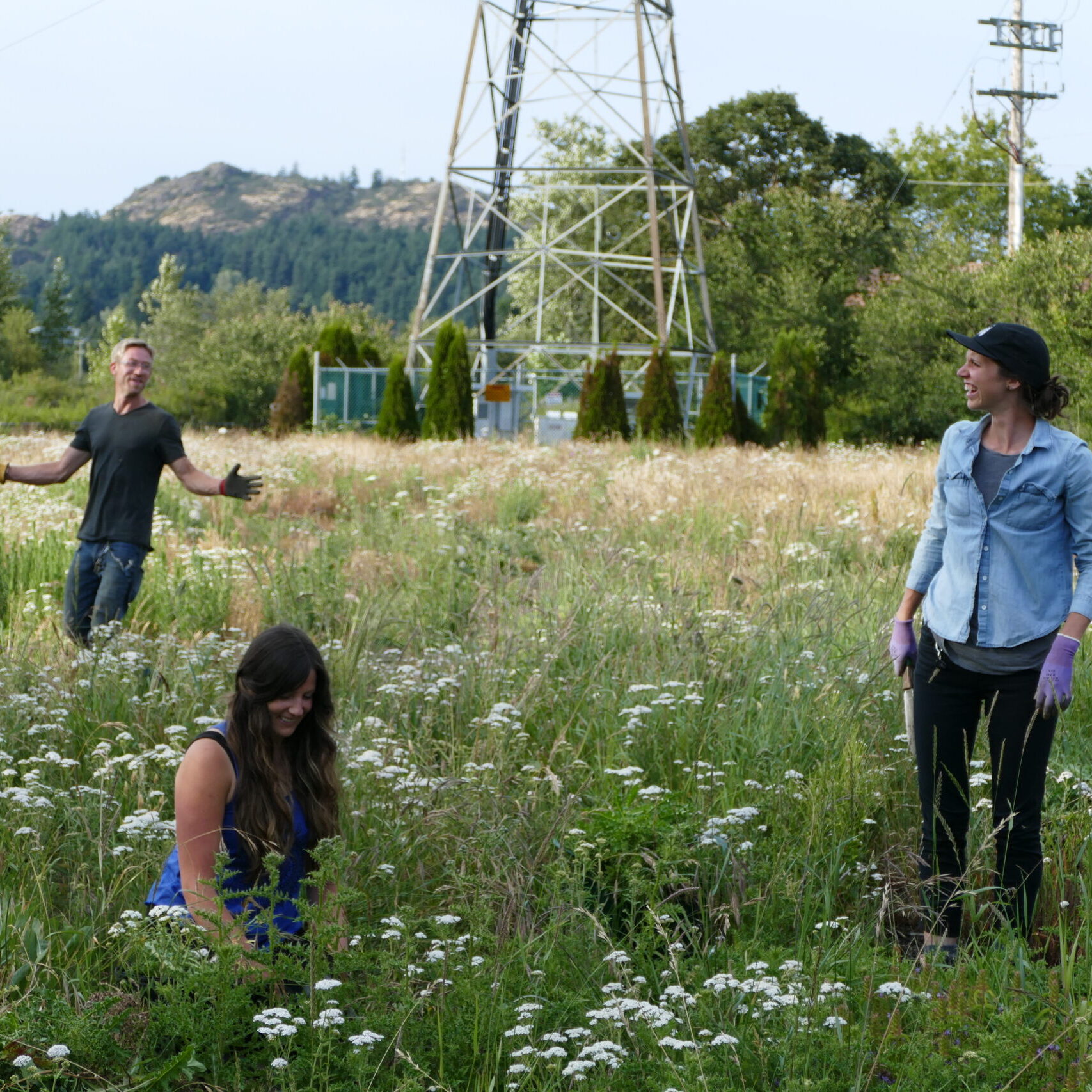
The Lochside Pollinator Meadow is a half-acre site in Saanich, located beside the Lochside Regional Trail on BC Hydro property within the Colquitz River Watershed.
Prior to restoration, the meadow was dominated by invasive grasses and compacted clay soils. Following the removal of several Garry oak trees during expansion of the adjacent BC Hydro substation, BC Hydro provided funding to Peninsula Streams & Shorelines (PSS) to support habitat restoration at the site. Beginning in 2018, PSS used this contribution to leverage additional support and transform the degraded site into a diverse native Garry oak meadow.
Garry oak meadows and other native flowering habitats provide important foraging and nesting opportunities for southern Vancouver Island's native pollinators, including bees, butterflies, moths, hover flies, beetles, and other insects. However, loss and fragmentation of these habitats have reduced the abundance and diversity of flowering plants available to pollinators. Restoring the site therefore offered an opportunity to create valuable habitat within an urban landscape while studying how native plant restoration could influence local pollinator communities.
Restoration Work
In 2018, PSS began restoring the site in partnership with Saanich Native Plants (now Satinflower Nurseries) and Pollinator Partnership Canada, and with support from the North Quadra Community Association, Don Mann Excavating, and BC Hydro.
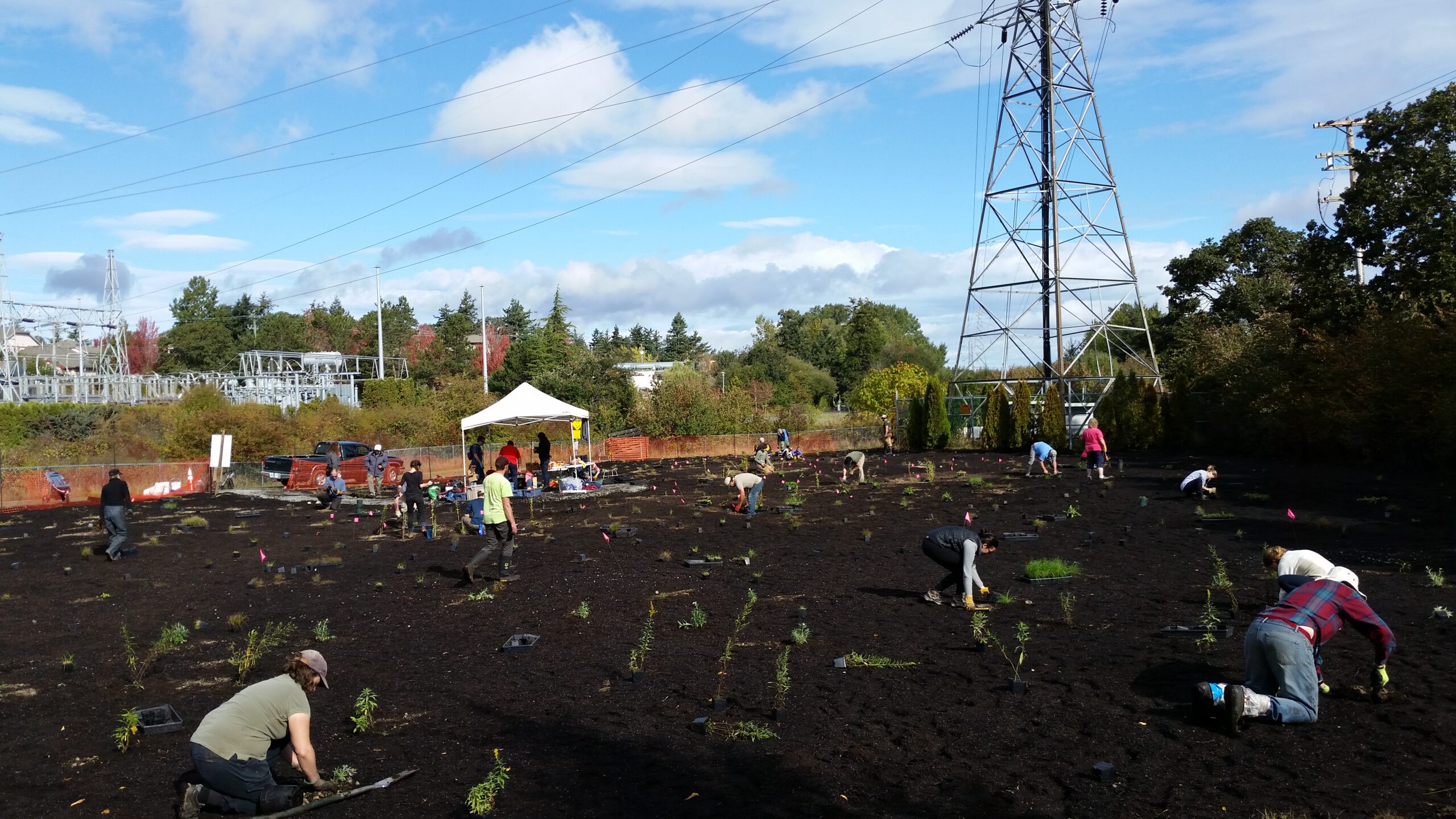
Existing invasive vegetation and degraded surface soils were removed, and approximately 160 cubic yards of clean topsoil were distributed across the site. A diverse mix of locally appropriate native plants was selected to provide flowers throughout the growing season and support a wide variety of pollinators.
Community volunteers helped plant more than 2,000 native plants across the meadow, complemented by broadcast seeding of additional native wildflowers and grasses. Small vernal pools and cobble mounds were also incorporated into the site to increase habitat diversity and provide additional nesting and refuge habitat for insects and other wildlife. Protective fencing was installed during establishment to reduce grazing and trampling of the newly planted meadow.
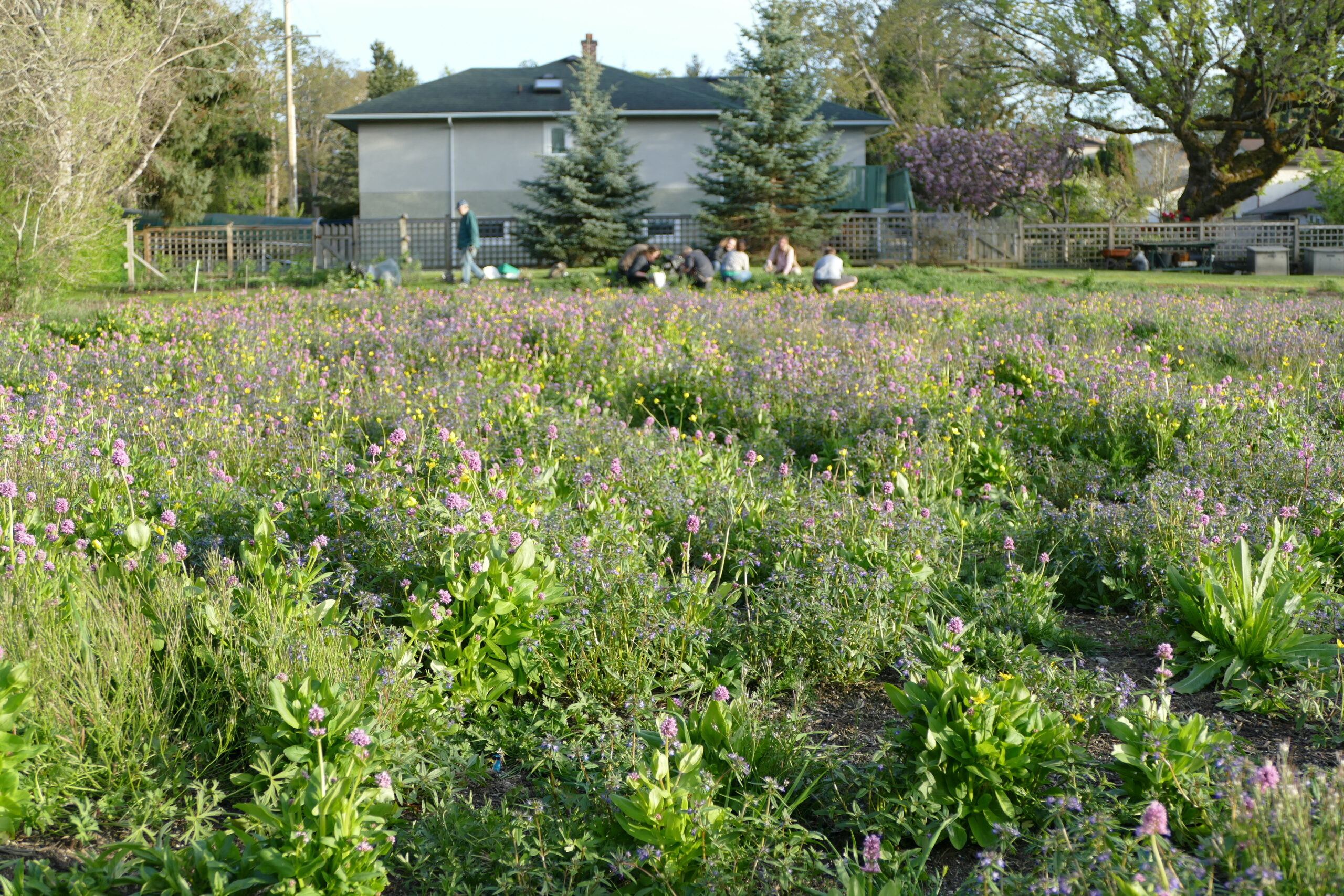
The result is a diverse native meadow containing species such as sea blush, woolly sunflower, yarrow, lupine, western buttercup, field chickweed, camas, columbine, spring gold, and desert parsley. Together, these plants provide an extended season of nectar and pollen while creating habitat for native pollinators including sweat bees, bumble bees, long-horned bees, and pebble bees.
Monitoring has demonstrated a substantial response from the local pollinator community. Surveys recorded almost eight times as many native bees during the first spring following restoration, and by 2021 more than ten times the number of bees were being observed compared with pre-restoration conditions.
Today, the Lochside Pollinator Meadow provides a colourful patch of native habitat within an otherwise highly modified urban and agricultural landscape. In addition to supporting pollinators and other wildlife, the meadow has become an educational and visually engaging natural space for nearby residents and people travelling along the Lochside Regional Trail.
Learn More