
Beach Education And Conservation of Habitat (BEACH) Program
Our diverse and productive shorelines are under increasing threat from pollution, overland flow erosion, sea level rise, climate-driven storm activity, and backshore development. Without thoughtful conservation, restoration, and planning, these culturally and ecologically vital areas risk being lost.
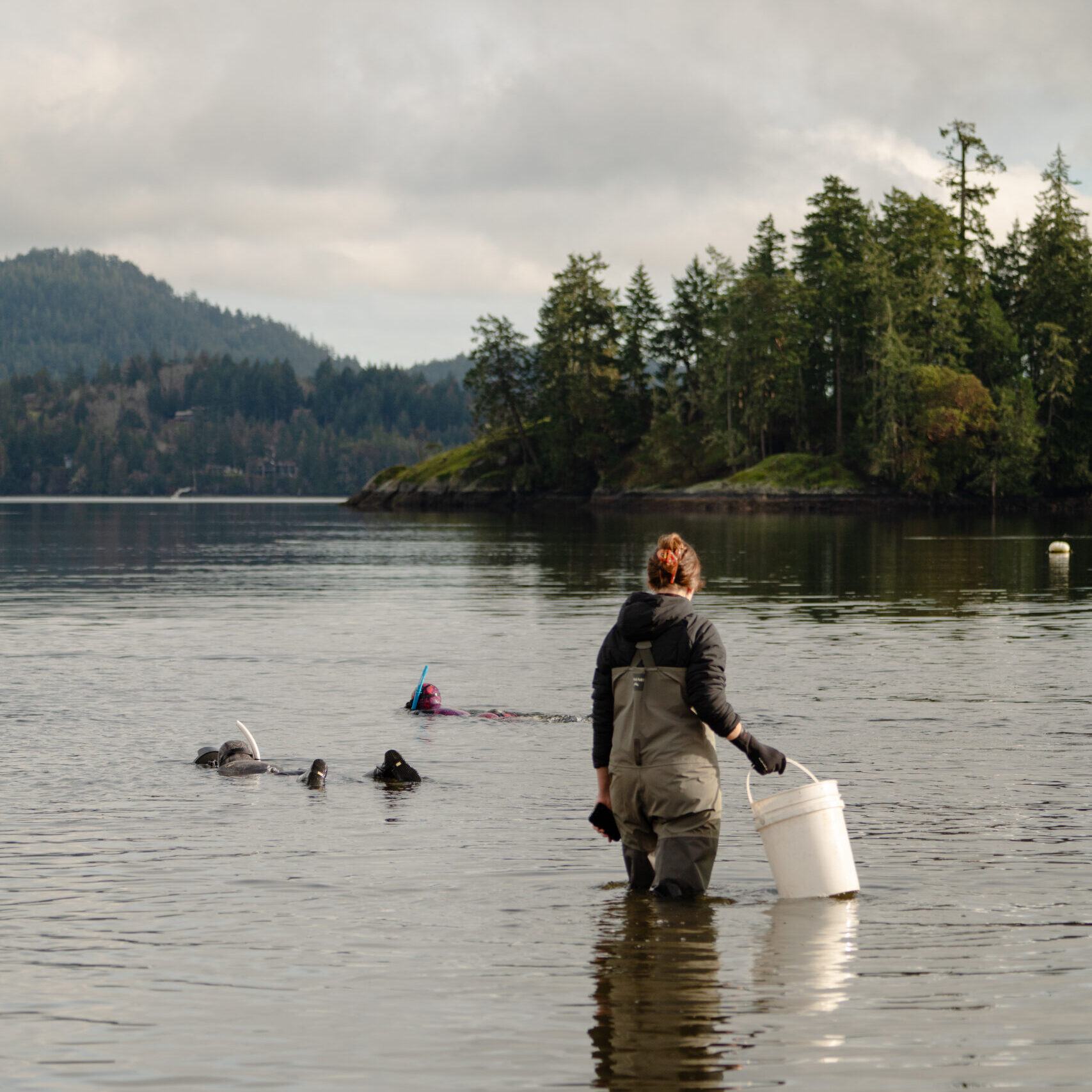
Our Beach Education and Conservation of Habitat (BEACH) Program responds to these challenges by fostering environmental stewardship through shoreline restoration, education, and community science. By engaging residents in hands-on activities—such as monitoring forage fish spawning, detecting and removing invasive European green crab, and tracking shoreline changes—participants gain practical skills and a deeper understanding of coastal ecosystems.
Together, this growing network of informed stewards strengthens our collective capacity to advocate for evidence-based decision-making, support restoration efforts, and take meaningful action to protect and restore our shorelines for future generations.
Forage Fish Spawning Surveys
Forage fish, often called prey fish or bait fish, are small schooling fish that play a crucial role in the marine food web as food, or ‘forage’, for a multitude of other species. There are 7 common species of forage fish in BC: Pacific sand lance, surf smelt, Pacific herring, Pacific sardine, Northern anchovy, eulachon, and capelin.
Forage fish are a vital link between low and high trophic levels, feeding on phytoplankton and zooplankton and transferring this energy to salmon, seabirds, marine mammals, and humans. For example, forage fish comprise 60% of adult Chinook salmon summer diets, which in turn comprise 80% of southern resident killer whale diets. With both Chinook salmon and southern resident killer whale populations in decline, having healthy populations of forage fish on our coast is critical to ensuring the overall health of the Salish Sea marine environment.
In addition to their ecological value, forage fish are also commercially, recreationally, and culturally important around the world, currently accounting for over 1/3 of overall marine harvest by weight.


Despite being relatively abundant, cumulative effects from predation, poor water quality, habitat modification and degradation, overfishing, and climate change make forage fish susceptible to dramatic population fluctuations.
Forage fish are undergoing a 'coastal squeeze', experiencing the effects of shoreline development on land and climatic conditions from the sea, diminishing the quality and quantity of beach habitat for spawning.
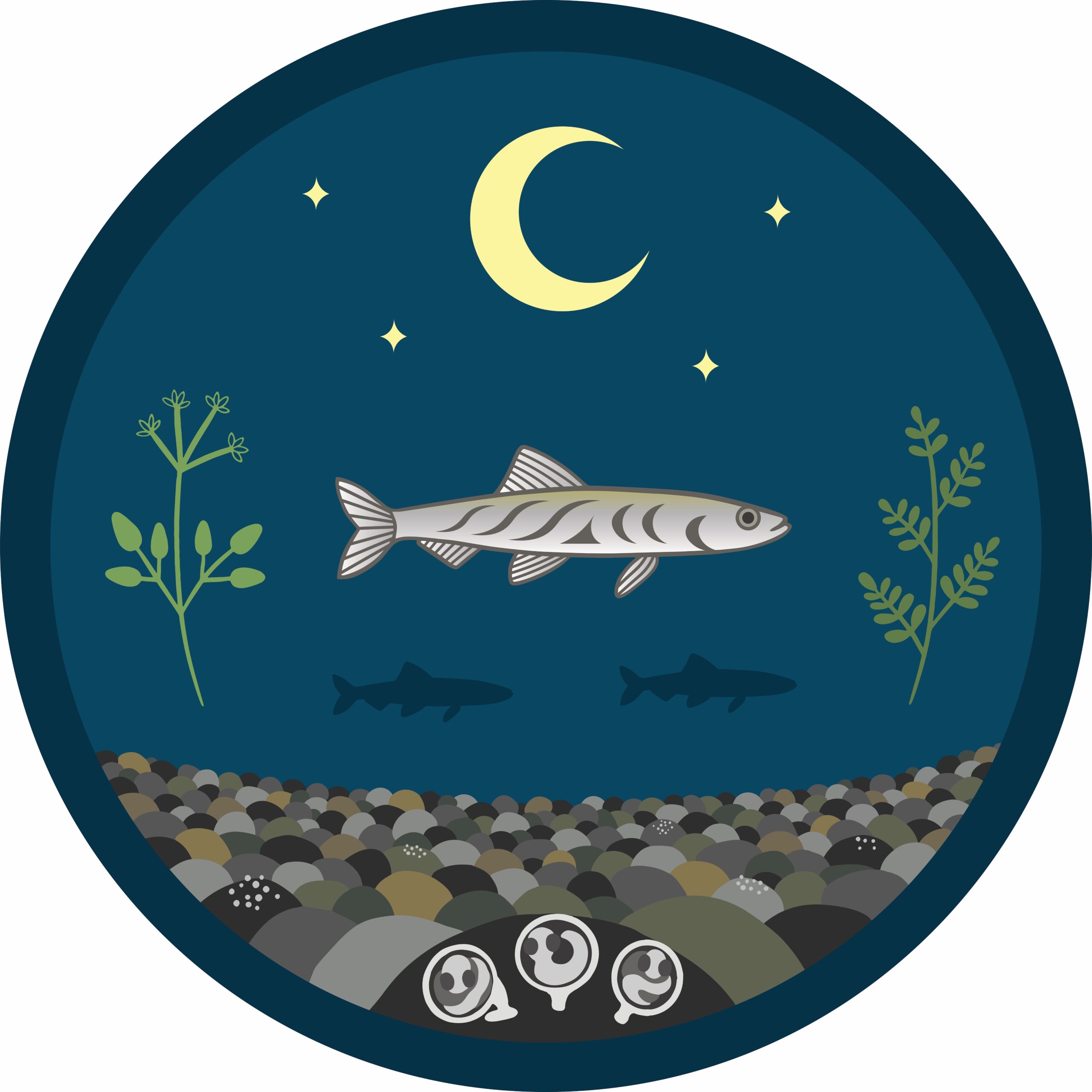
Logo design by W̱SÁNEĆ artist Sarah Jim

Unlike other forage fish species that spawn in offshore waters, nearshore waters, or river systems, surf smelt and Pacific sand lance utilize the upper intertidal zone of sand-gravel beaches for spawning: individuals approach the water line on a high tide and deposit adhesive eggs on beach sediments. After incubation, hatched larval fish, roughly 3 mm in length with a small yolk sac attached, swim off at the next high tide.
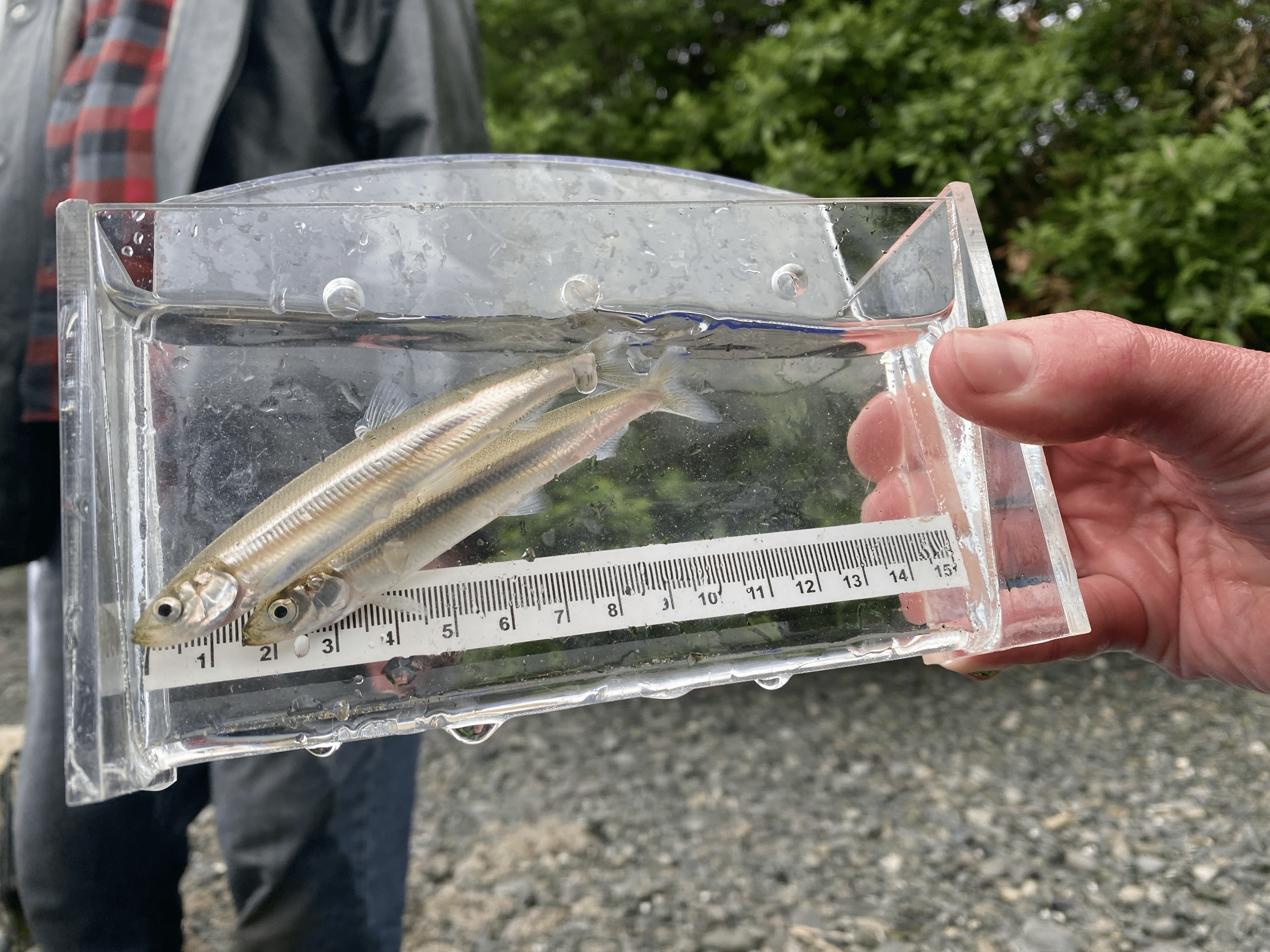
Surf smelt, reaching lengths of up to 22 cm, spawn year-round on sediments comprised of pea gravel with a sand base. Eggs incubate within the sediment for roughly 12 days in the summer and up to 20 days in the winter. For summer spawning populations, shade from overhanging vegetation and freshwater seepage act as important means for lowering egg desiccation risk. Surf smelt eggs are roughly 1.0-1.2 mm in diameter and have a single sticky pedestal-like attachment called a 'peduncle' that adheres to a single grain of beach sediment.
Pacific sand lance, reaching lengths of up to 28 cm, spawn only during the winter season (roughly November-March) on sediments comprised of pea gravel with a sand base, but also extending into pure sand. Eggs incubate within the sediment for up to 3-4 weeks, and are slightly smaller at 0.8-1.0 mm in diameter. They have no peduncle, and instead are sticky on all sides of the egg, thus adhering to multiple grains of beach sediment. The yolk also features one large oil droplet.

Our Program
While Washington State has carried out forage fish beach spawning surveys along their coastline since 1972, surveys in British Columbia are underdeveloped. As a result, knowledge is limited on Pacific sand lance and surf smelt abundance, distribution, and use of intertidal beaches for spawning in British Columbia’s portion of the Salish Sea.
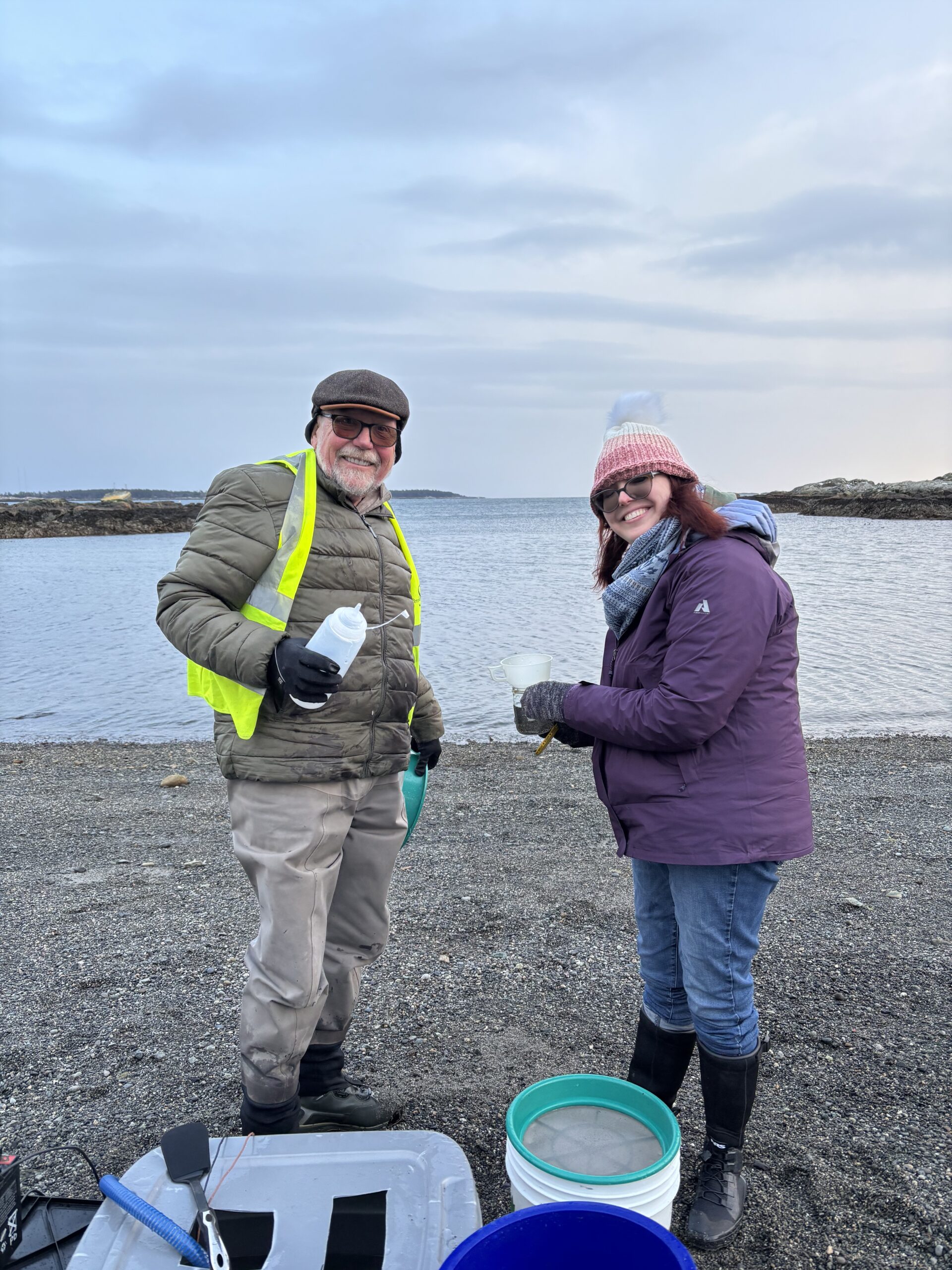
Our volunteer-run forage fish beach spawning surveys help identify and monitor active surf smelt and Pacific sand lance spawning habitat through the collection of sediment samples from locations with favourable habitat characteristics. Positive detections for spawning help us to understand forage fish movement, spawning behaviour, how human actions may be affecting them, and what changes occur in marine food webs as forage fish continue to face threats to their populations.
The valuable data we collect from these forage fish beach spawning surveys not only address the data gaps in British Columbia, but are important for informing nearshore policies, supporting evidence-based advocacy that push for the protection and restoration of forage fish beach spawning habitat, and contributing to other nearshore research projects throughout the Salish Sea.
Using the menu icon in the top left corner, toggle between layers and explore our sampling sites and where we've found surf smelt and Pacific sand lance eggs.
In 2022, we co-founded the Coastal Forage Fish Network (CFFN), a collaboration of individual groups across the BC coast working towards identifying and monitoring forage fish spawning habitat. The network’s vision is thriving stable forage fish populations that can sustain the predators that rely upon them and contribute to a healthy marine food web within the coastal waters of BC. The network is continually growing and includes multiple environmental NGOs, community groups, and First Nations, encompassing hundreds of community scientists.
All of the CFFN's forage fish beach spawning survey data is publicly available in the centralized and open-access online database known as the Pacific Salmon Foundation (PSF) Marine Data Centre, a collaborative program between PSF and the Institute for the Ocean and Fisheries at the University of British Columbia (UBC). PSF also hosts a forage fish dashboard for the CFFN, where users can access resources and explore where spawning has been documented across the BC coast. Check out the data here.
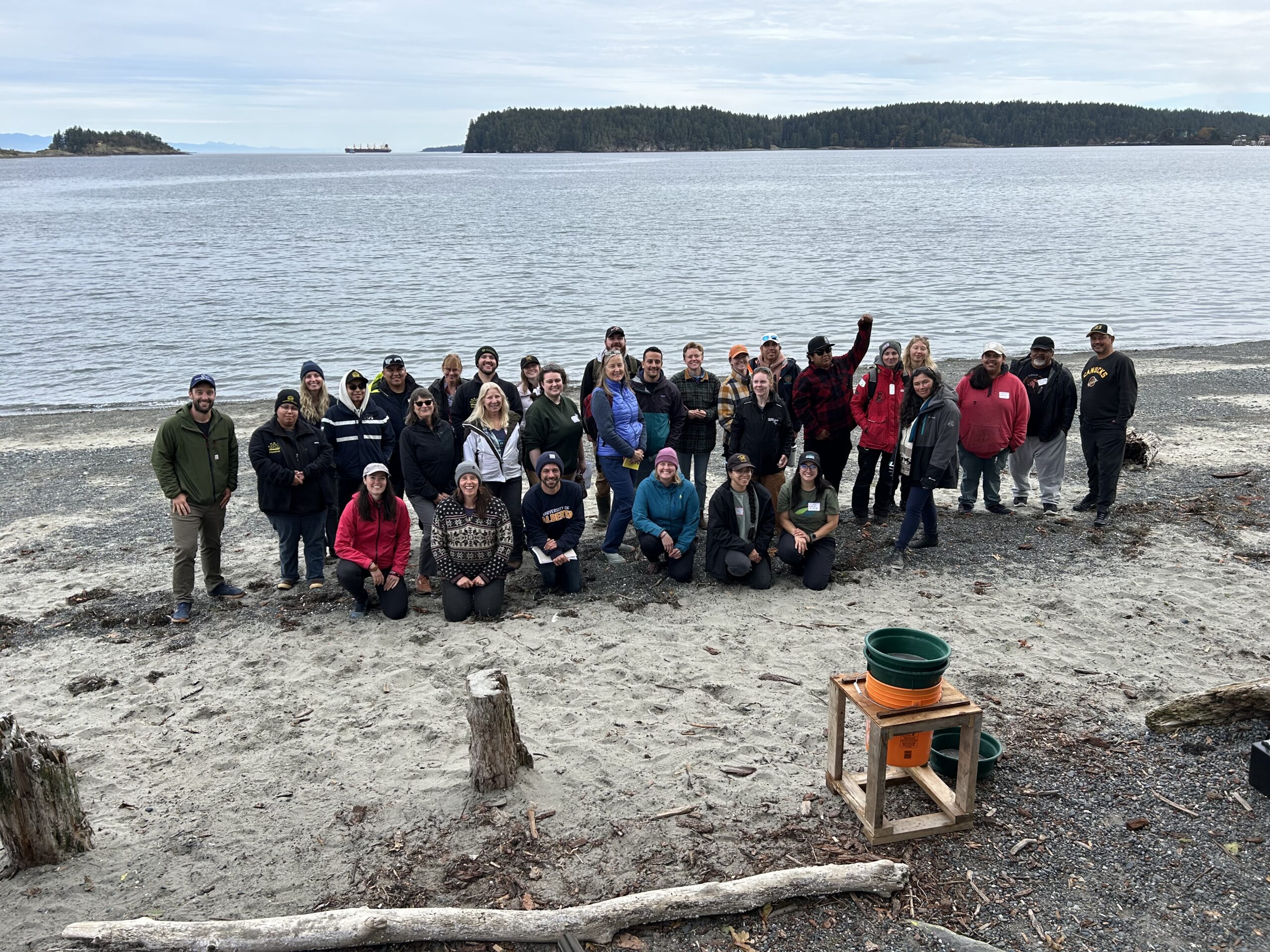
European Green Crab Monitoring & Removal
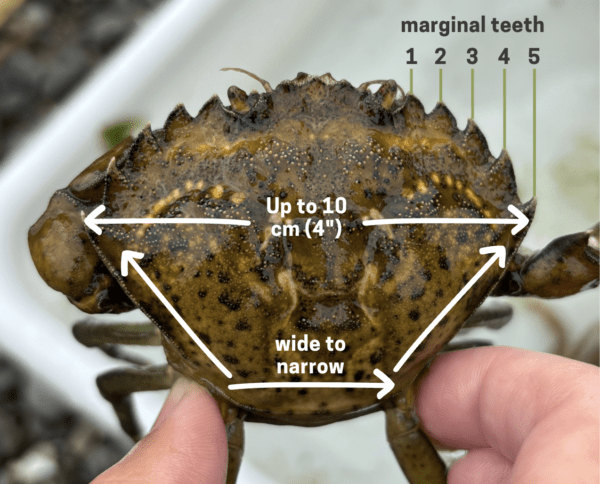
Native to coastal areas of Europe and North Africa, European green crabs have quickly become one of the world's worst invasive species, now spotted on every continent except Antarctica. Brought over to the east coast of North America in the ballast water of ships in 1817, green crabs have continued to spread both by natural means (long, drifting larval stage) and human-mediated transportation (ballast water, seafood and fishing gear transport, and recreational boaters).
First spotted on the west coast of Vancouver Island in the late 1990s, green crabs have slowly been spreading along the BC coast, with well-established populations in the Sooke Basin and Clayoquot Sound. Other small detections have popped up in Witty's Lagoon, Esquimalt Lagoon, the Gorge Waterway, Saanichton Bay, Salt Spring Island, Ladysmith, Boundary Bay, Port Hardy, and Haida Gwaii.
Extremely adaptable to a wide range of environmental conditions, green crabs are able to quickly establish in a variety of habitats and climates. Once they do, these crabs have a major ecological impact, outcompeting native species for food, excavating eelgrass beds during foraging and burrowing, and heavily predating on a number of native species such as clams, oysters, mussels, snails, small fish, and shore crabs. Their impact on eelgrass beds is of particular concern due to their role as critical estuary habitat for outmigrating juvenile salmon.
Once a population of European green crabs has established, it's virtually impossible to fully eliminate them. Early detection and prevention of this species in our local waters is key; by getting ahead of the problem and removing individuals before they have a chance to reproduce, we can protect our native populations and habitats from this harmful invasive species.
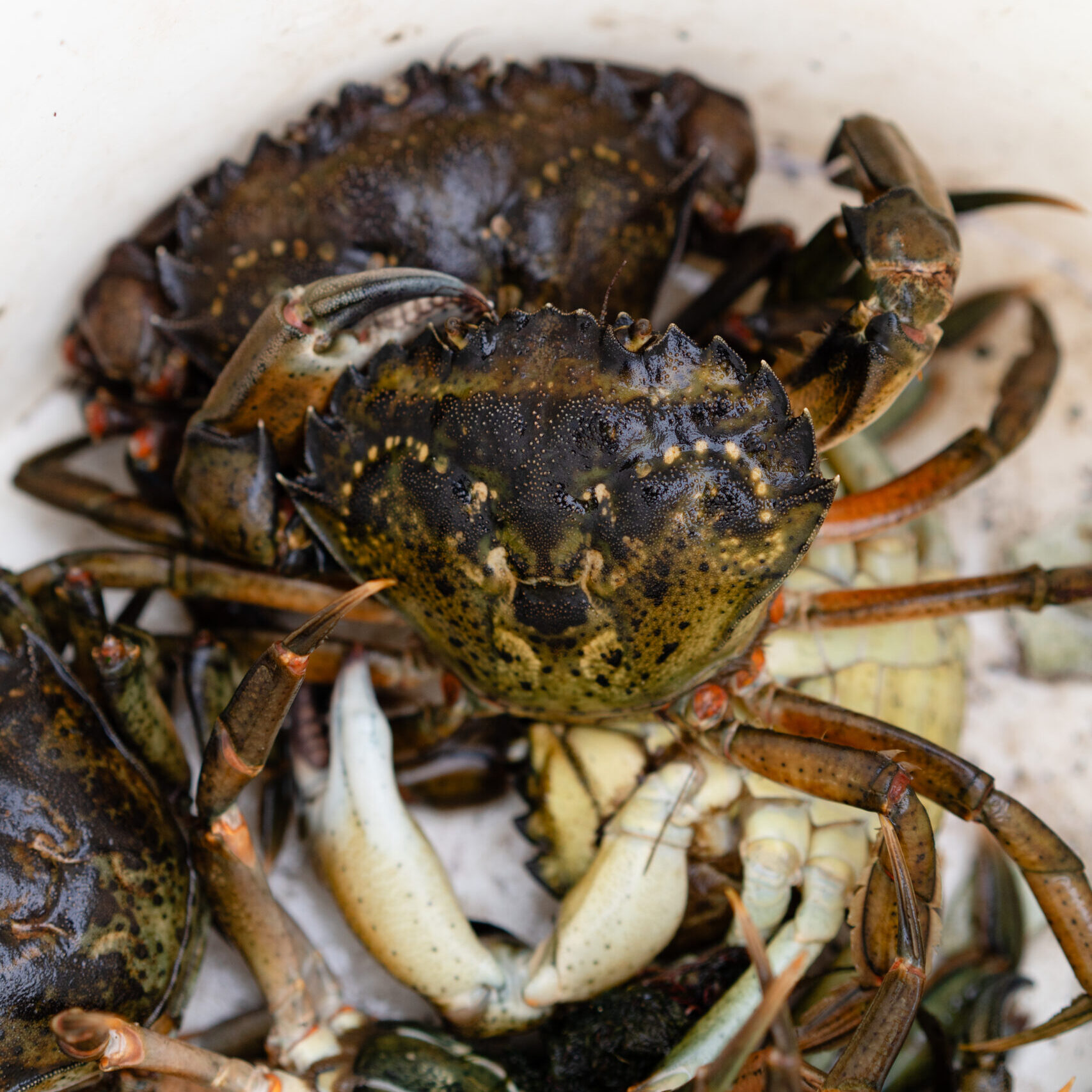
Trapping
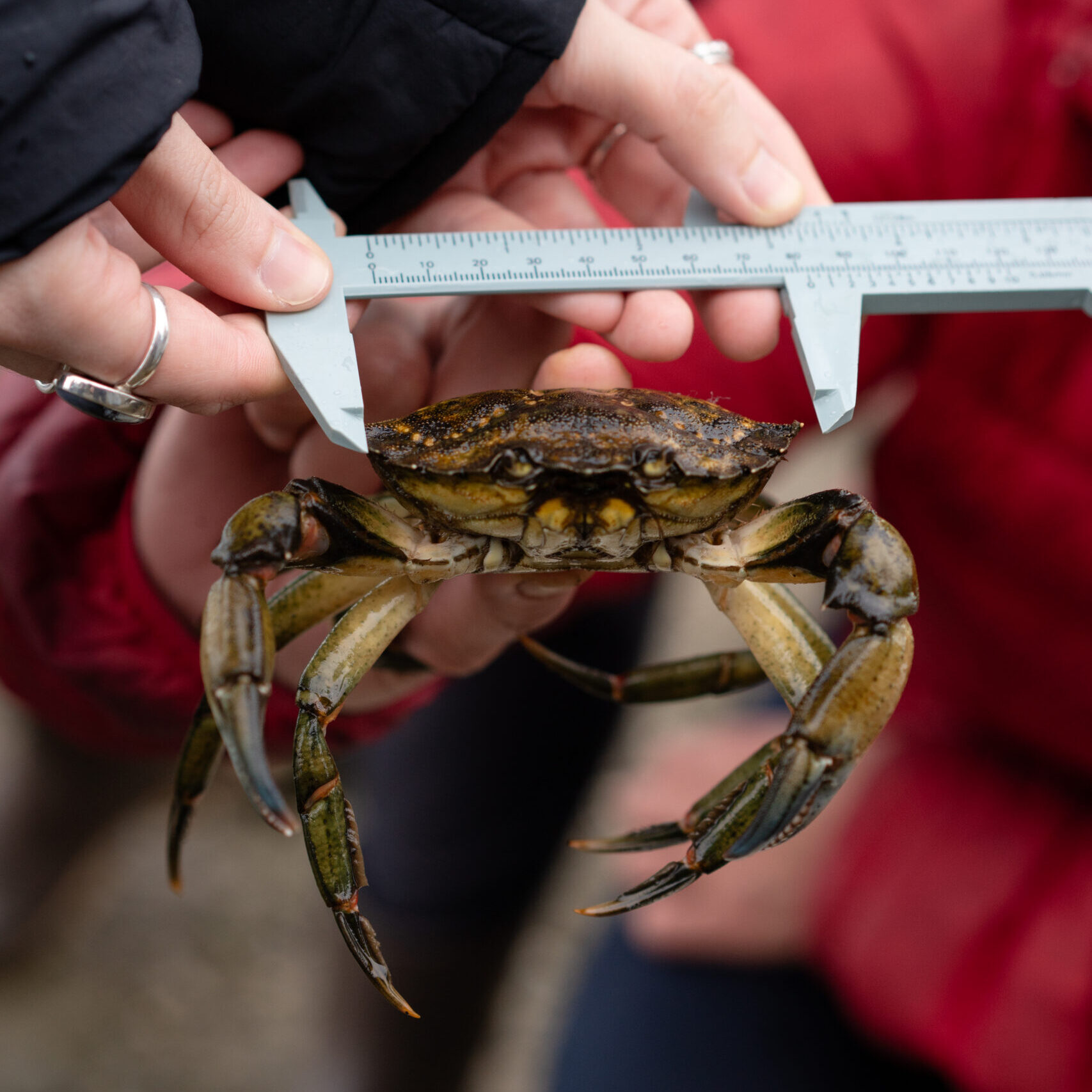
An Early Detection and Monitoring Network (EDMN) was established in 2018 by Fisheries and Oceans Canada (DFO) to monitor European green crab in the Salish Sea, but remained relatively small in scale due to limited capacity.
In 2022, the Pacific Salmon Foundation received funding from DFO’s Aquatic Invasive Species Program to expand this network through a large-scale, three-year initiative: the Pacific Region European Green Crab Mitigation and Capacity Development Project. Subcontracting the Coastal Restoration Society, they provided training and equipment to groups across the coast for trapping, building the local capacity needed to sustain long-term European green crab monitoring efforts.
From April to September, we conduct monthly trapping events at select sites where European green crabs have not yet become established. This early detection approach has two key goals: to prevent the spread of green crab into new areas by identifying and removing individuals before populations can take hold, and to collect baseline data on native species to better understand what is at risk if an invasion occurs. At each event, a line of six traps is set at low tide and left to soak for 24 hours. Upon retrieval, all species are identified and recorded—native species are released immediately, while any European green crabs are removed.
Snorkelling Removal
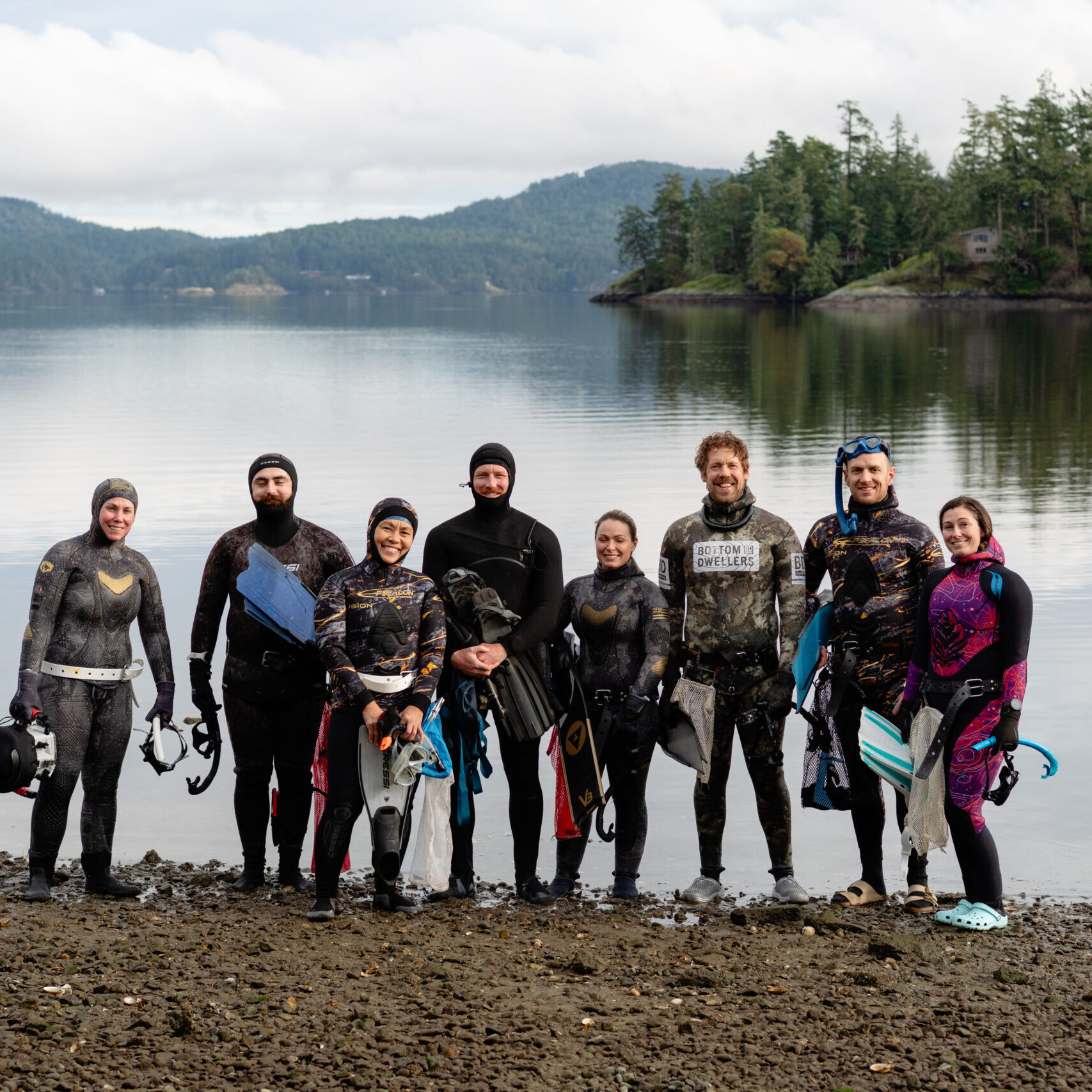
In partnership with Bottom Dwellers Freediving, we host snorkel-based European green crab removal events in the Sooke Basin. Program participants come as skilled snorkelers/freedivers, and leave as trained stewards with hands-on experience in identifying and removing green crab from our local waters.
Want to get involved? Sign up for the program mailing list below:
Shoreline Restoration & Monitoring
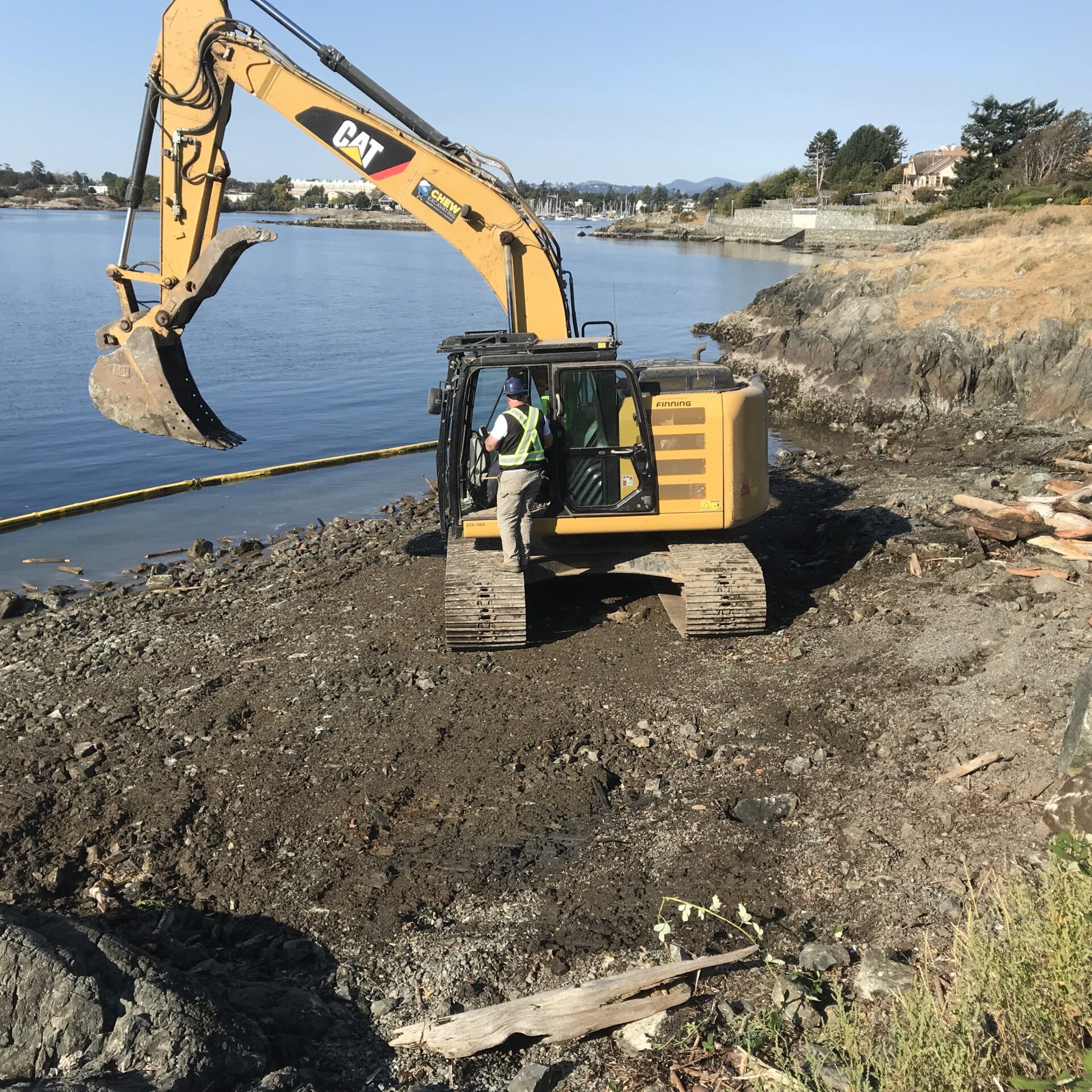
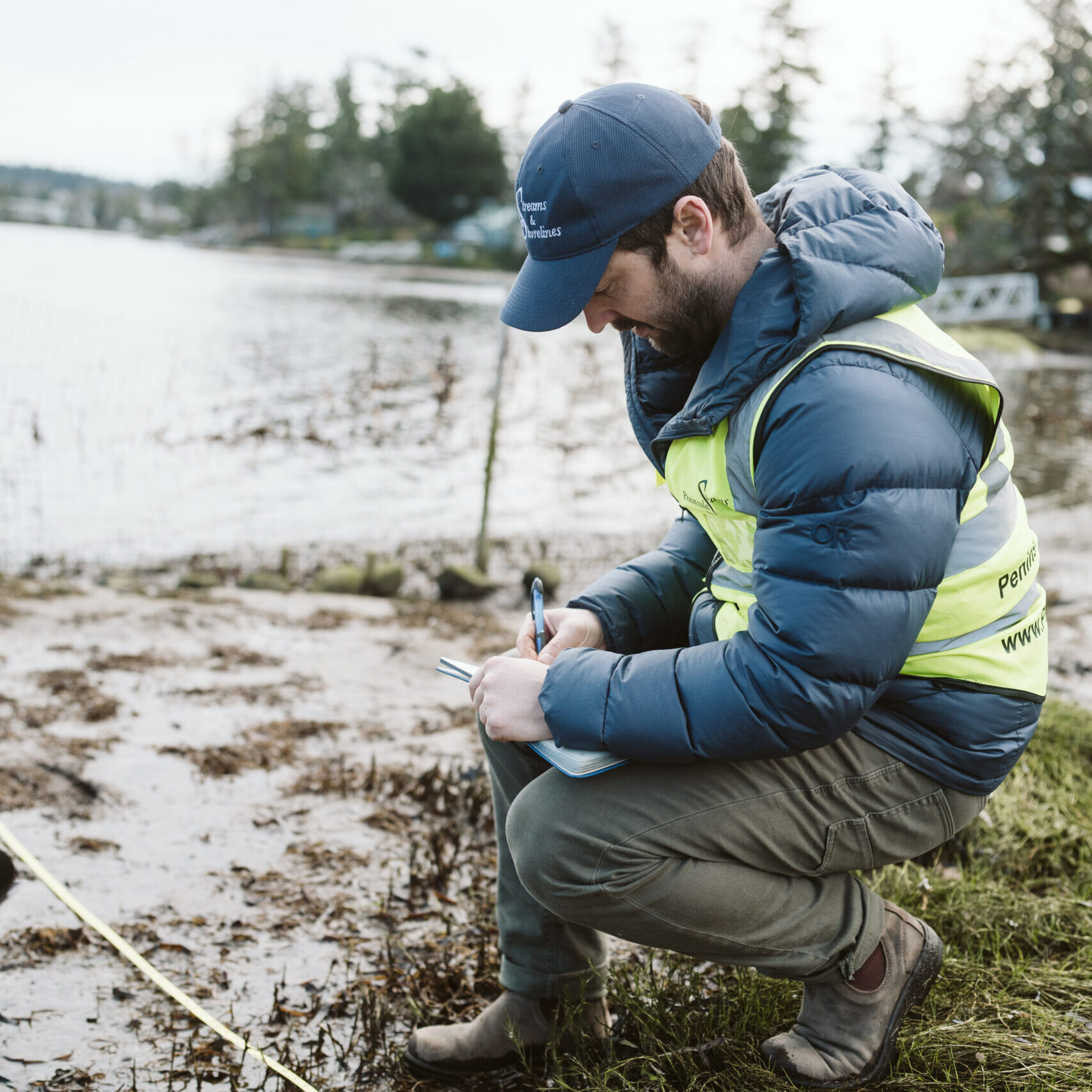
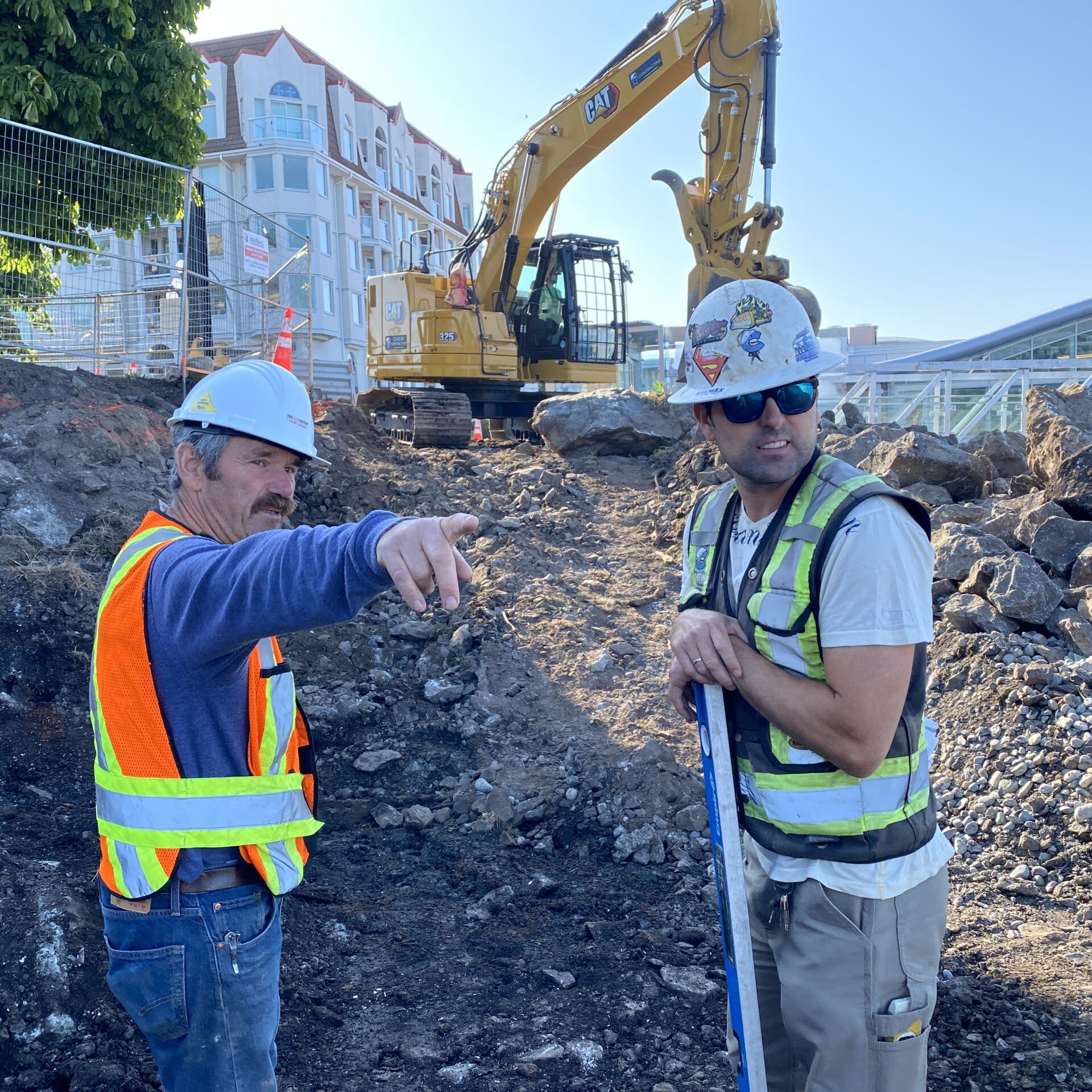
Our goal is to restore, conserve, and protect shoreline habitats against their many threats. We help to identify and monitor key habitats, inform policies, and demonstrate Nature-based Solutions (NbS), such as removing unnecessary riprap and bulkheads, “nourishing” beaches with forage-fish-friendly sediments, and using native plants to protect shorelines while maintaining natural sediment and nutrient processes so these places persist for people and nature to enjoy.
Learn more about our restoration projects here:
Beach Cleanups
Garbage, debris, plastics, chemicals, and other synthetic materials pose a severe threat to our ecosystems, damaging sensitive habitats and the diverse flora and fauna that depend on them, including vital species like salmonids.
We actively coordinate cleanup initiatives at local shorelines in need, not only aiming to physically remove harmful waste but also to educate and inspire individuals about the importance of conserving our natural environments. By engaging communities in hands-on conservation activities, we strive to foster a collective responsibility towards protecting and restoring our aquatic ecosystems.