
Rain Gardens for Headwaters


Across urban landscapes, rainfall is rapidly routed off impermeable surfaces such as roads, rooftops, parking lots, and driveways, rather than soaking into the ground as it would in a natural landscape. This creates large volumes of fast-moving stormwater that flow through catch basins, pipes, and ditches into local creeks and shorelines. Along the way, runoff picks up a wide range of pollutants, including tire and brake dust, hydrocarbons, metals, fertilizers, pesticides, sediment, and litter. The resulting surges in stormwater can erode stream banks, destabilize streamside vegetation, degrade spawning habitat, and carry contaminants into downstream waters. At the same time, diverting rainfall away from the ground reduces groundwater recharge, leaving urban streams with lower summer flows and warmer water when salmon and other aquatic life are most vulnerable.
Rain gardens offer a simple, nature-based approach to addressing these impacts. A rain garden is a planted area designed to capture and absorb runoff from nearby impermeable surfaces, allowing water to infiltrate gradually into the soil rather than being rapidly conveyed to a storm drain. Rich soils, plant roots, and microorganisms help filter and break down pollutants, while vegetation takes up water through evapotranspiration. The infiltrated water also replenishes groundwater, supporting the gradual seepage of cool, clean water into streams during dry periods. In this way, rain gardens can help restore a more natural “timed-release” of rainfall, reducing the damaging peaks of stormwater during heavy rain while helping sustain healthier flows and temperatures during the summer.
The benefits become increasingly meaningful when rain gardens are implemented across an entire watershed. While a single rain garden may have a relatively small effect, a network of rain gardens can collectively reduce the volume and velocity of stormwater entering urban streams and intercept pollutants before they reach aquatic habitat. This distributed approach to Green Stormwater Infrastructure (GSI) can help build resilience to the combined effects of urban development, stormwater pollution, and climate change, while creating healthier landscapes for people and wildlife.
Our grassroots Rain Gardens for Headwaters program provides Green Stormwater Infrastructure (GSI) education and capacity building for local communities and public schools. Through education, outreach, and the creation of demonstration rain gardens, we aim to take rain gardens from obscure to commonplace and build a broader understanding of how rainwater can be managed as a natural asset rather than treated as waste. Demonstration sites provide focal points where students, educators, and community members can see and participate in rain garden design and installation while learning about stormwater, local hydrology, water quality, ecosystem health, and landscape resilience to climate change. By increasing both practical skills and community understanding, the program supports a watershed-scale shift toward keeping more rainwater in the landscape and less in storm drains.
Monterey Middle School Rain Garden
This 200 m² rain garden demonstration site was built in collaboration with the Friends of Bowker Creek Society's 1000 Rain Gardens Project and School District 61, with support from Oak Bay Engineering & Public Works. Located beside the Monterey Middle School parking lot, the garden captures and treats runoff from approximately 1,000 m² of contributing area before it enters municipal pipes and flows to McNeill Bay. Previously, parking lot runoff flowed directly into a storm drain, carrying heat, sediment, and urban pollutants to the nearshore environment. The rain garden now slows, stores, and filters this water through engineered soils and vegetation while also addressing localized drainage issues on site.
Students were involved throughout the design, construction, and planting phases and now help maintain the garden. The site includes curb cuts, sediment-settling areas, gently sloped flow paths, and overflow controls to manage rainfall while protecting existing features, including a mature oak tree. Through classroom presentations, hands-on workshops, and outdoor learning, students have developed a deeper understanding of stormwater, rain gardens, and Green Stormwater Infrastructure (GSI), and are now creating interpretive signage to share what they have learned with the school and wider community.

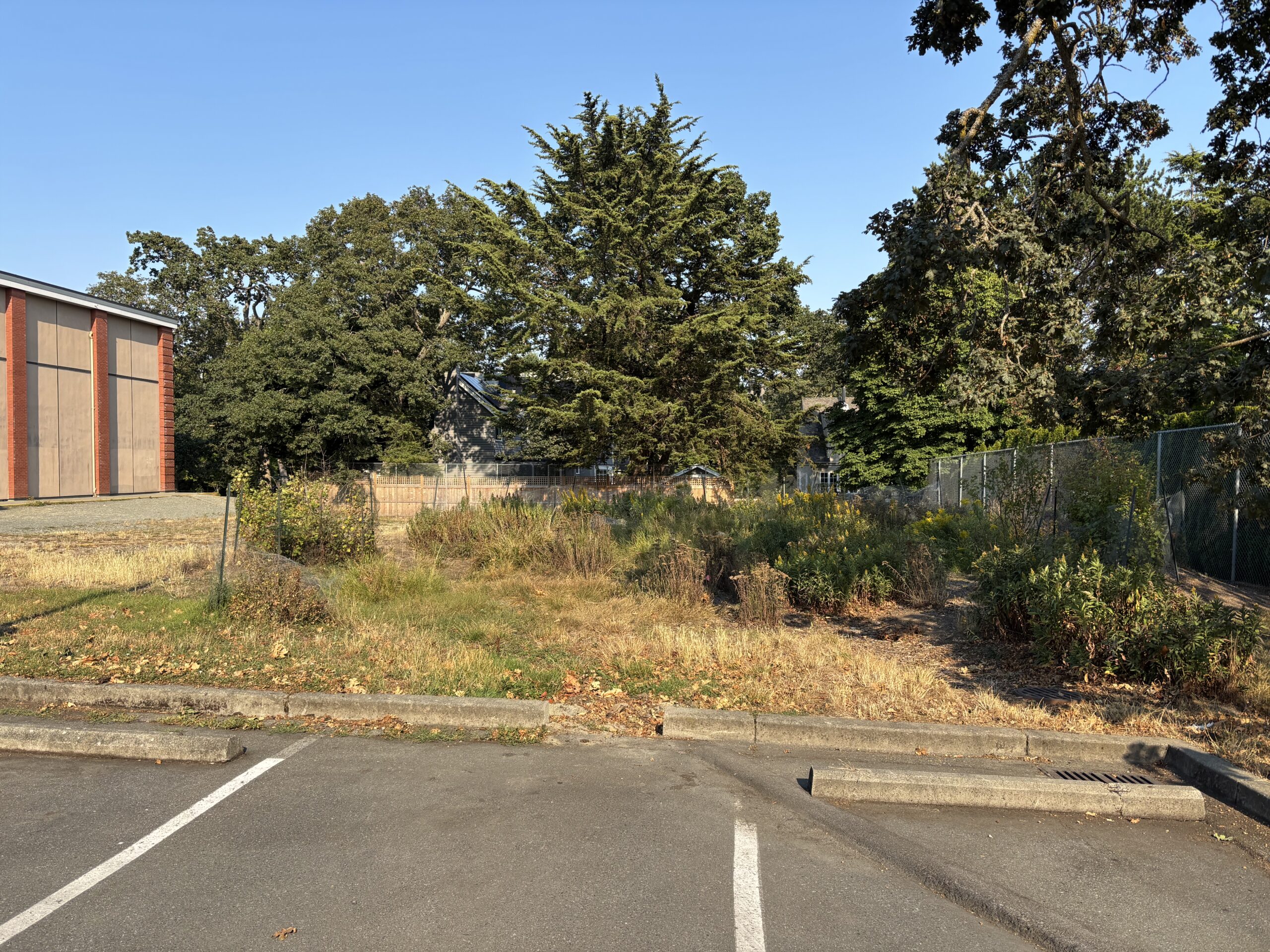
Campus View Elementary School Rain Gardens

The Campus View Elementary School project includes one large demonstration rain garden and three smaller rain gardens that capture and filter runoff from the school bus loop and staff parking lot in the headwaters of Bowker Creek. The area historically experienced frequent localized flooding, with stormwater rapidly draining into underground infrastructure connected to the creek just 150 m away. The rain gardens now slow, store, and filter this runoff through engineered soils and vegetation, reducing flooding while helping protect downstream aquatic habitat. Their high-visibility locations, including a site adjacent to Gordon Head Road, also provides effective public demonstrations of Green Stormwater Infrastructure (GSI) in action.
The project brought together the Friends of Bowker Creek Society, School District 61, and students from Campus View Elementary and Mount Douglas Secondary Schools. Students helped shape, plant, and maintain the gardens and continue to steward the sites through regular weeding, mulching, and planting. With features such as sediment-settling areas, gentle flow paths, and overflow controls, the gardens also serve as outdoor learning spaces where students and the broader community can explore stormwater management, watershed health, and stewardship of Bowker Creek.
Parkdale Early Childhood Centre Rain Garden
The rain garden at Parkdale Early Childhood Centre captures and filters hot, fast-moving stormwater from the parking lot using bioactive soils and native plants before it enters the Cecilia Creek watershed. Previously, runoff flowed directly into a storm drain connected to Cecilia Ravine Park and the Gorge Waterway, carrying heat and urban pollutants downstream. The garden now slows, cools, and filters this water while increasing the site’s capacity to manage heavy rainfall and reducing pooling and flooding. Its vegetation also adds shade and helps create a cooler, healthier outdoor environment.
The project was a collaboration between Parkdale Free Church, Parkdale Early Childhood Centre, the Friends of Bowker Creek Society's 1000 Rain Gardens Project, and the City of Victoria. Designed as a community-led demonstration site, the garden provides a shared space for learning and stewardship among staff, families, church members, and children. The plants serve as a living classroom, offering hands-on opportunities to learn about plant life, urban water cycles, and species of cultural significance to Indigenous Peoples. As both functional Green Stormwater Infrastructure (GSI) and an outdoor learning space, the garden demonstrates how community partnerships can support watershed health while creating greener, more engaging spaces for children.


Oak Bay High School Rain Gardens
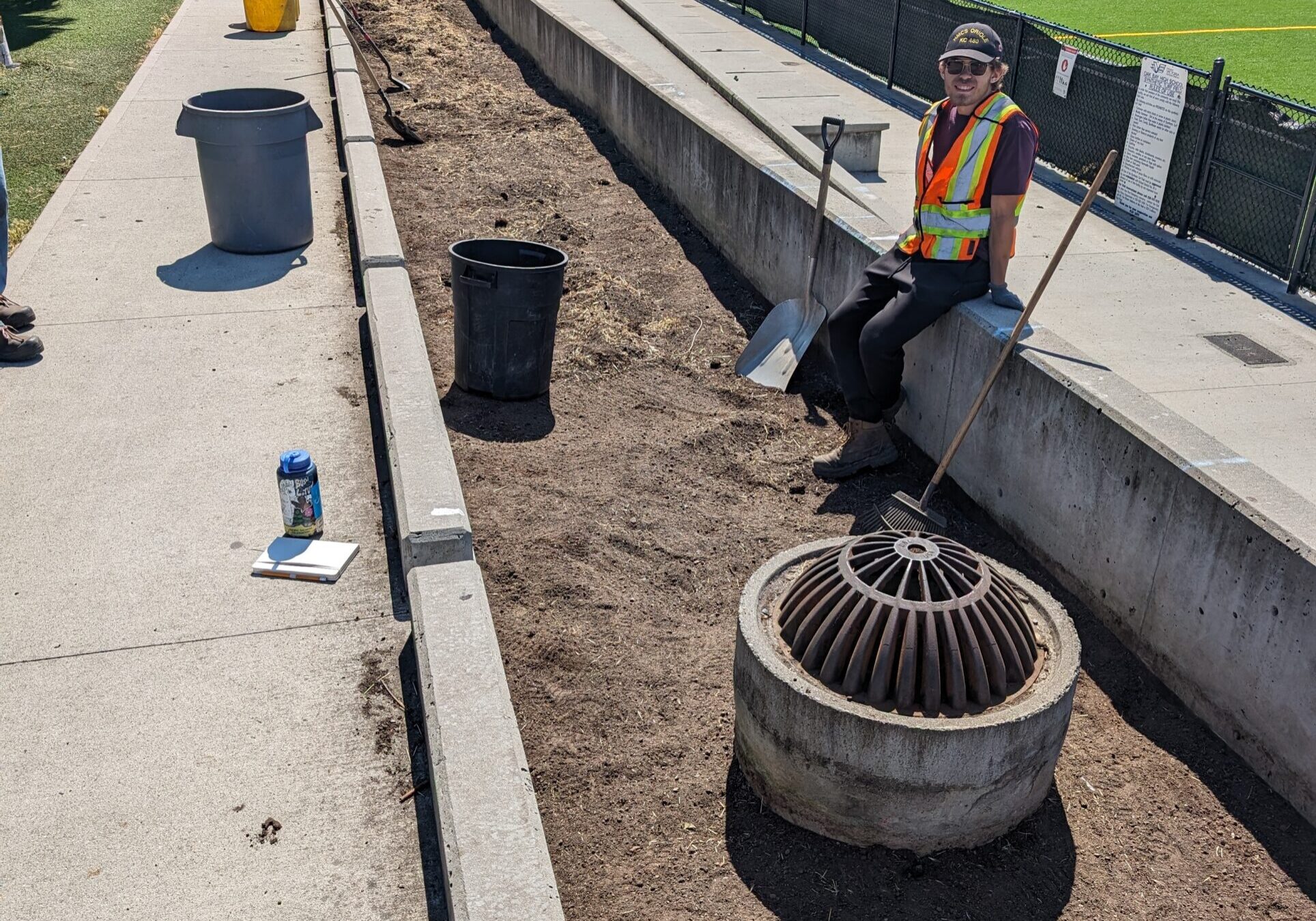
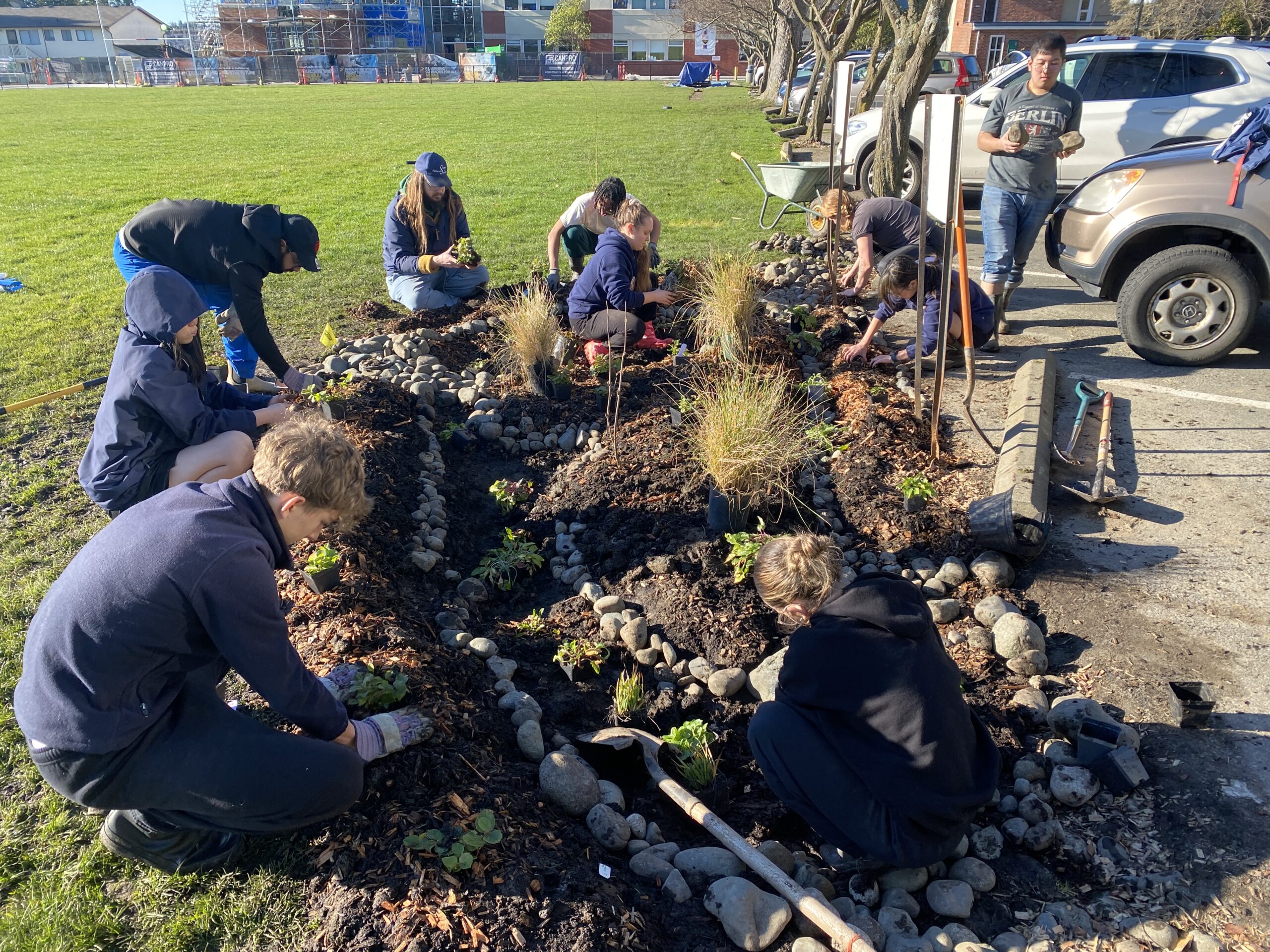
Partnering with Oak Bay High School, School District 61, and the Friends of Bowker Creek Society, we restored and enhanced Green Stormwater Infrastructure (GSI) across the school grounds. Students, staff, and volunteers revitalized an existing rain garden along the parking lot by removing invasive species and planting diverse native vegetation. Students also helped refurbish neglected bioswales, while PSS enhanced a stormwater retention cell beside the outdoor classroom to help slow, cool, and filter runoff before it enters Bowker Creek. Together, these improvements help reduce urban stormwater impacts while supporting biodiversity and watershed health.
The project combined hands-on restoration with classroom learning, engaging students in stormwater management, native plant ecology, and watershed stewardship. PSS worked directly with Oak Bay High classes through educational presentations, demonstrations, and planting activities. Native plant outcroppings were also established as outdoor learning spaces for Biology classes, providing opportunities to study local ecology and biodiversity while fostering a lasting connection to the Bowker Creek watershed.
St. Michaels University School Rain Garden
Coming soon!
Coming Soon: Sioux Place Rain Garden
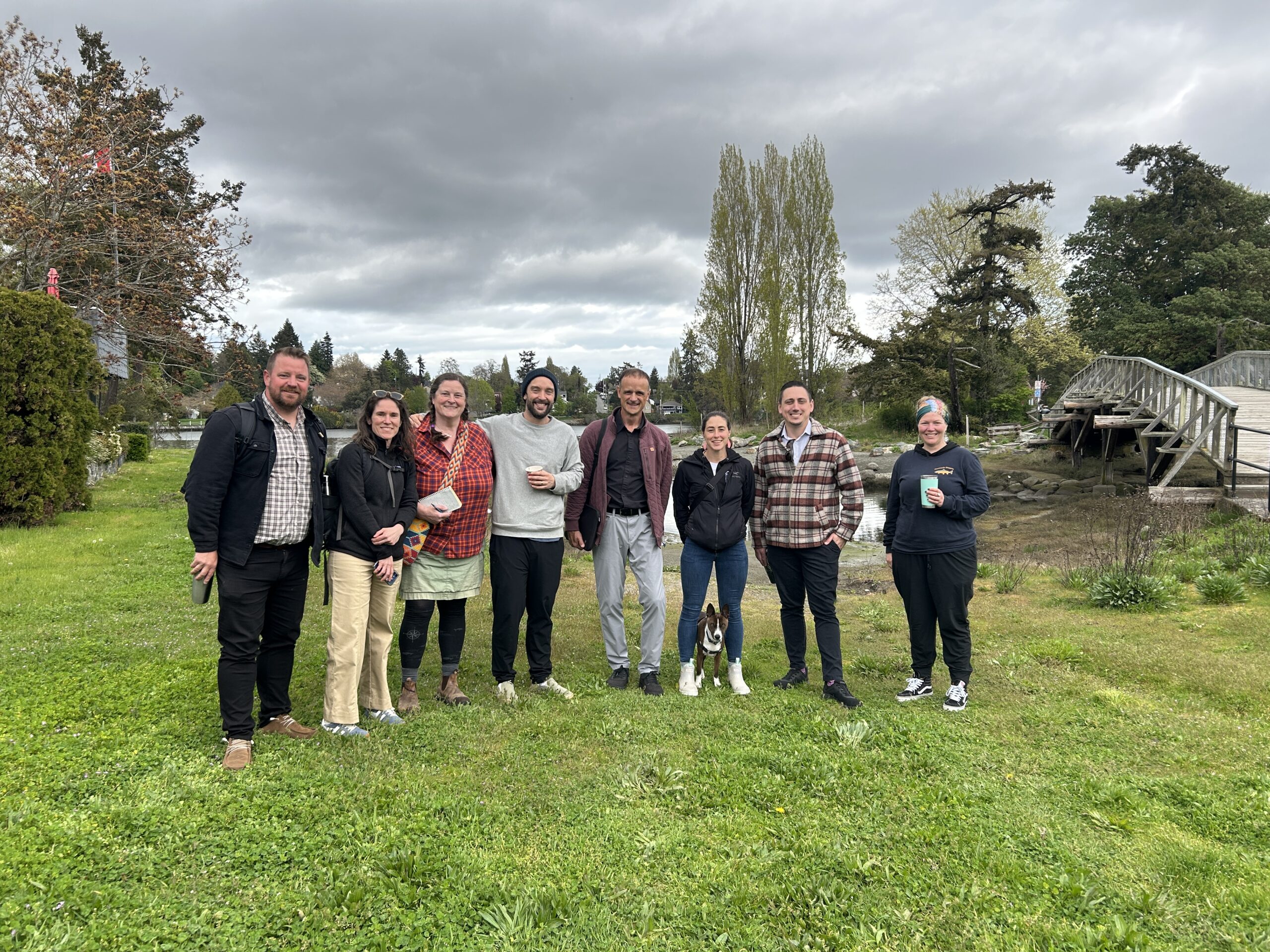
Coming in fall 2026, the Sioux Place Rain Garden will capture and filter urban runoff before it reaches Gorge Creek and the Gorge Waterway. Developed in partnership with the Township of Esquimalt, and with support from the British Columbia Conservation Foundation (BCCF), the Gorge Waterway Action Society (GWAS), the Capital Regional District (CRD), and the Songhees Nation and Esquimalt Nation stewardship teams, the project will use Green Stormwater Infrastructure (GSI) to slow, store, and infiltrate stormwater, reducing peak flows and filtering pollutants before they reach the watershed. Native plants will also create habitat for pollinators while increasing soil moisture retention and adding ecological value to the park.
The project is being developed as a community learning and stewardship site, with opportunities for planting, education, and long-term monitoring. With detailed designs complete and construction scheduled for late September 2026, the rain garden will demonstrate how Nature-based Solutions can be integrated into public spaces to improve watershed health and community resilience.
Learn More
Scroll through or click to view this story map created in 2023 explaining how rain gardens work.