
Water Quality Monitoring Program
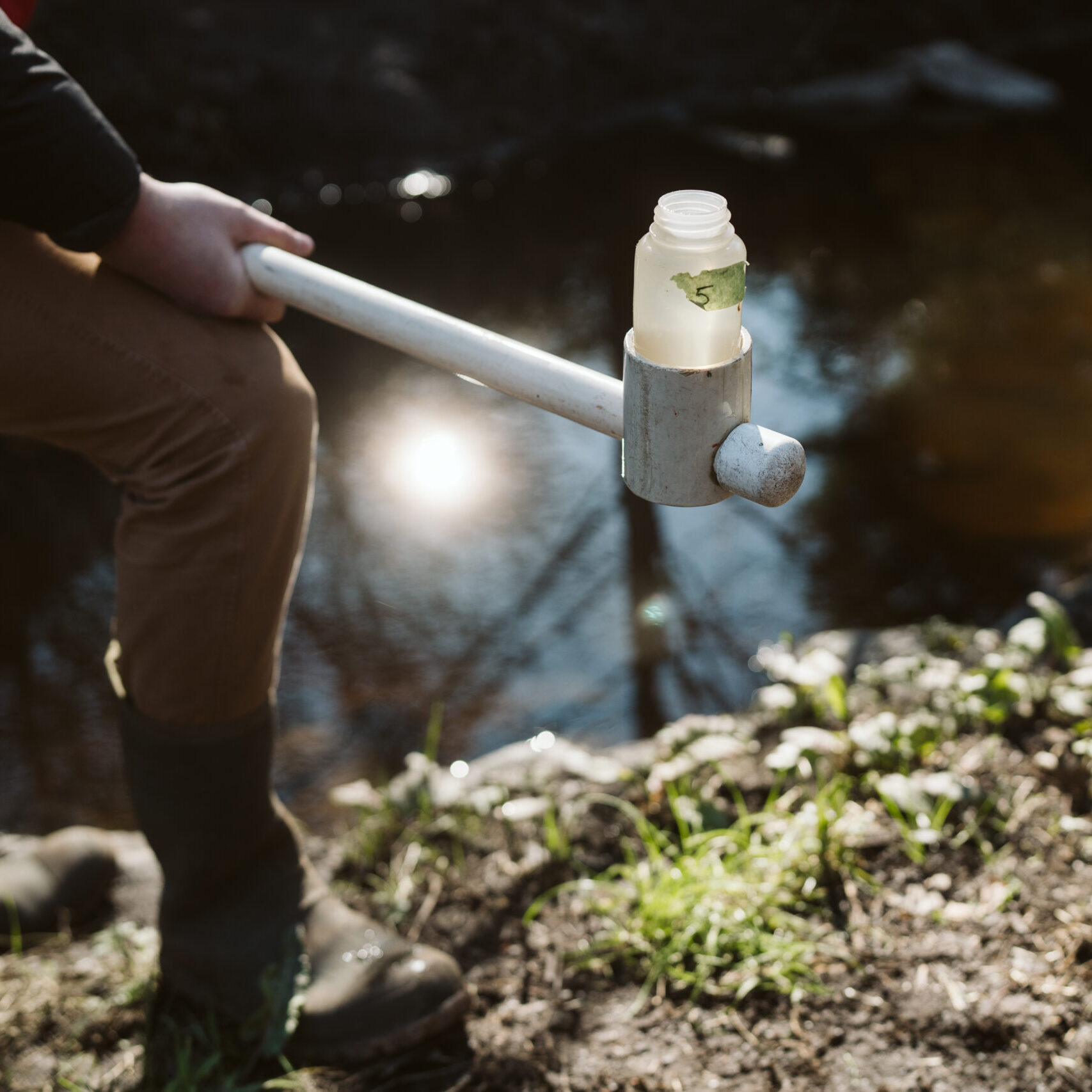
Monitoring the Hagan–Graham (KENNES) Watershed was one of the foundational projects of PSS when it was first formed in 2002, specifically focused on monitoring streams near the Keating Industrial Area in Central Saanich. This effort was officially formalized in 2005, when PSS began monthly water quality sampling at several sites throughout the KENNES Watershed. With over 20 years of continuous data collection, PSS now maintains one of the most temporally extensive datasets of any watershed on Vancouver Island, with the program currently supported by the District of Central Saanich.
In 2011, the Tetayut Creek Watershed was added to the Central Saanich Water Quality Program, expanding coverage to additional salmon-bearing streams influenced by outfall from the Keating Industrial Area. Today, monitoring of 15 sites across these two watersheds forms the core of our water quality program, with dedicated volunteers collecting field data and samples for laboratory analysis on a monthly basis. All water quality data are publicly accessible and can be explored through the Pacific DataStream platform.
Explore the data below:
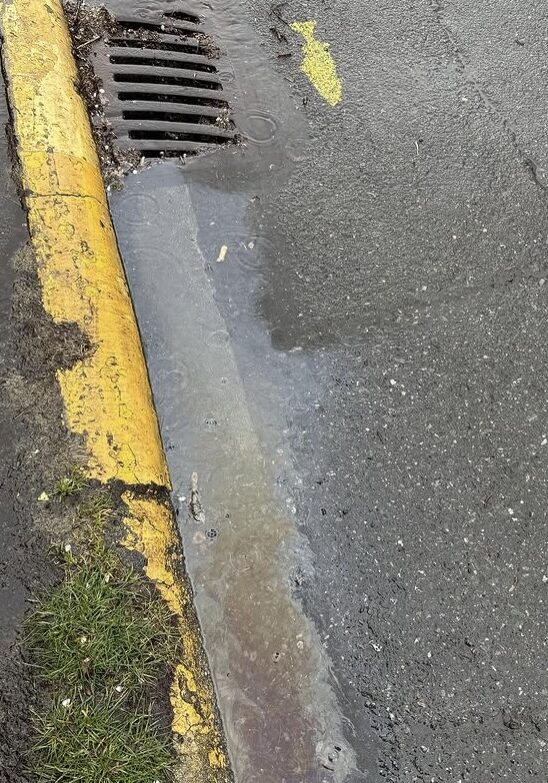
6PPD-quinone (6PPD-Q) is an emerging toxic contaminant linked to vehicle tire wear. As tires wear down through contact with road surfaces, microscopic tire particles accumulate on roadways. The tire additive 6PPD, which helps prevent tire degradation, reacts with ozone in the atmosphere to form 6PPD-Q. During rainfall events, these tire-derived contaminants are washed from roads into stormwater systems and can ultimately enter local streams and creeks.
Although 6PPD-Q was only identified as a cause of acute salmon mortality in 2020, it has since become recognized as a significant threat to salmon populations in urban watersheds. The contaminant is highly toxic to salmonids, including coho salmon and coastal cutthroat trout—two species we commonly see throughout the Saanich Peninsula. Even extremely low concentrations can be harmful to these species; research has shown that concentrations equivalent to a single drop in an Olympic-sized swimming pool can be toxic! Exposure to 6PPD-Q can result in Urban Runoff Mortality Syndrome (URMS), causing symptoms such as loss of equilibrium, gasping at the water’s surface, and rapid mortality.
In partnership with the BC Conservation Foundation and the Applied Environmental Research Laboratories (AERL) at Vancouver Island University, we monitor 6PPD-Q concentrations in streams across the Saanich Peninsula. Sampling focuses on stormwater outfalls and other locations where roadway runoff enters local waterways, helping identify areas where contaminant concentrations may be elevated. This information helps guide our future restoration and stormwater management efforts, including the prioritization of Green Stormwater Infrastructure projects such as rain gardens and other natural filtration systems designed to reduce the movement of contaminants into streams.
Together with volunteers and local stewardship groups, we monitor water quality in creeks across the Saanich Peninsula, collecting samples from the ḰENNES (Hagan-Graham), Tetayut, Colquitz, Millstream, Swan, Tod, Bowker, and KEL,SET (Reay) watersheds, with additional creeks occasionally monitored as necessary.
Our objective is to collect long-term data that can be used to identify watershed trends and anomalies, while raising awareness of watershed health through publicly accessible data. Volunteers measure a suite of physical and chemical parameters, including key indicators of aquatic health such as temperature, dissolved oxygen, turbidity, and pH—factors that need to remain within suitable ranges to support fish survival. Nutrient concentrations, including ammonia, nitrate, nitrite, and orthophosphate, are also analyzed to assess potential influences from agricultural runoff and urban inputs. In the KENNES (Hagan-Graham) and Tetayut Creek watersheds specifically, volunteers collect water and sediment samples for complex lab analyses to determine concentrations of contaminants like metals, hydrocarbons, and fecal coliforms. Our volunteers have discovered and reported many pollution incidents over the years, which has resulted in early remediation and prevented long-term damage.
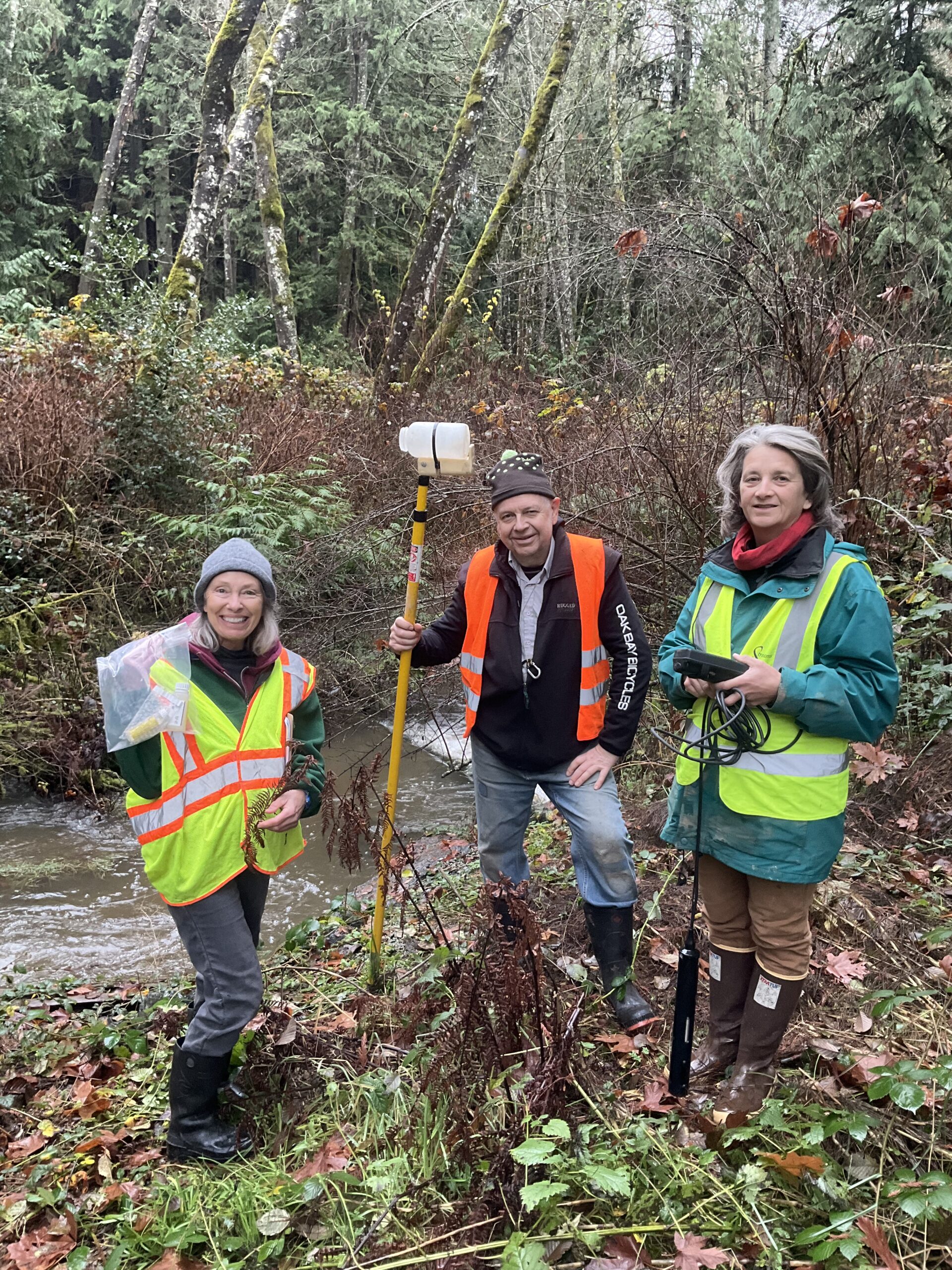
We also support a number of local stewardship groups in their water quality monitoring efforts, helping them collect their own data and expand the number of creeks being regularly monitored. These groups typically sample monthly and upload their observations to Water Rangers, a community science focused, open access data platform.
Explore the data below:
Interested in learning more? Explore the BC Conservation Foundation’s tire wear toxin database documenting 6PPD-Q across eastern Vancouver Island here!