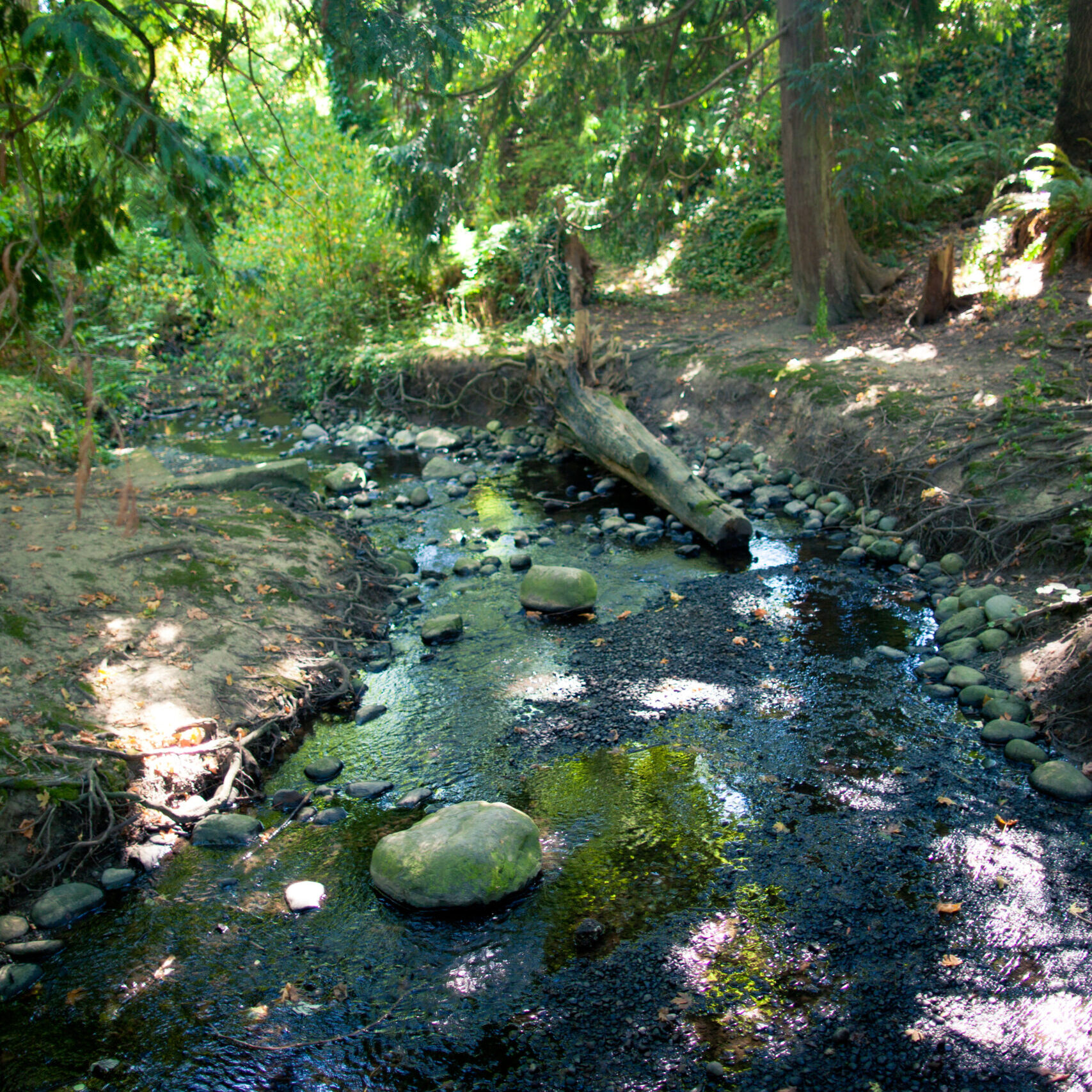
KEL,SET (Reay) Creek Watershed
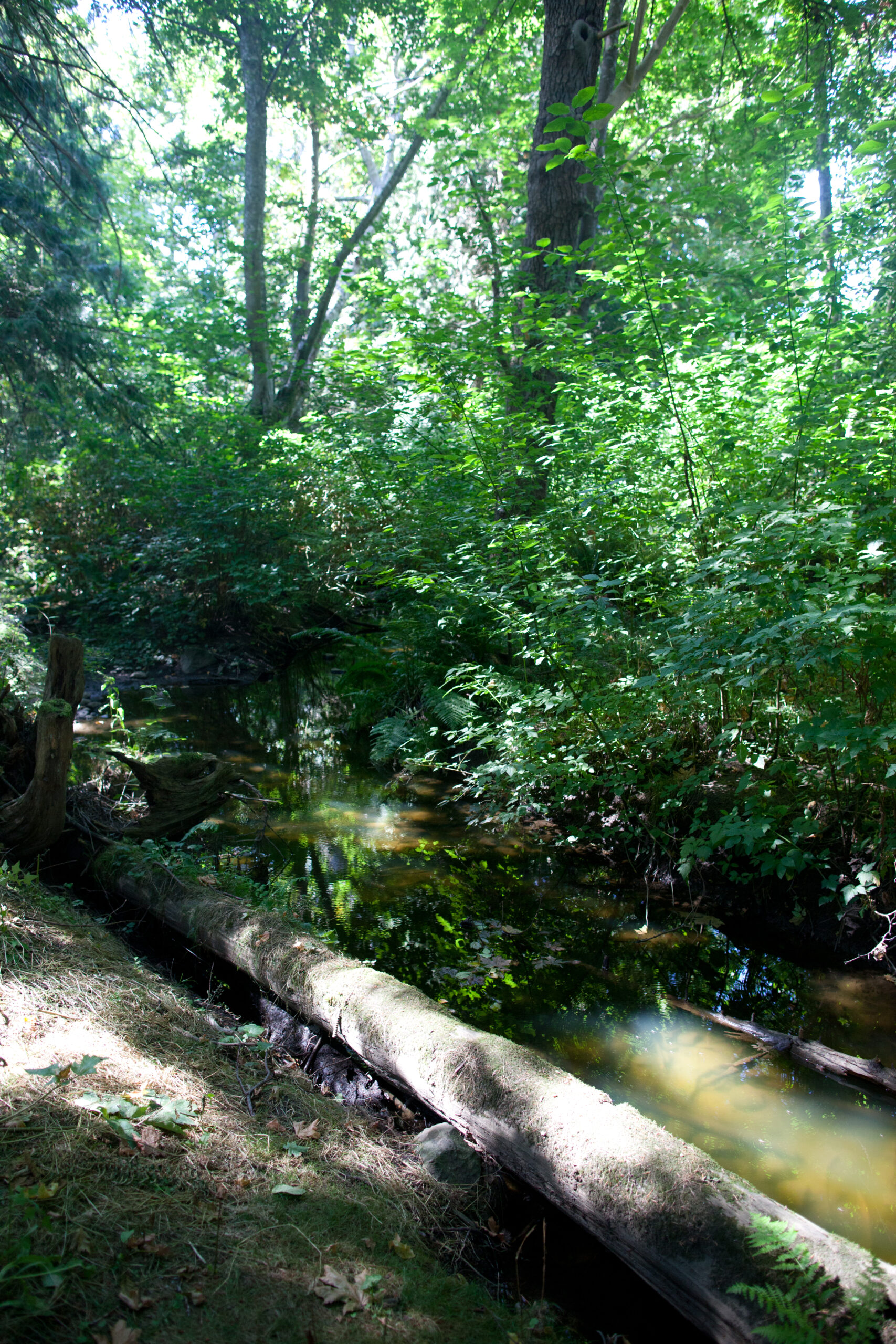
The KEL,SET (Reay) Creek Watershed is a small but ecologically and culturally significant watershed located within the District of North Saanich and the Town of Sidney, draining southeast into Bazan Bay. Approximately 1.8 km long and draining a 250-hectare watershed composed of lands managed by the Victoria Airport Authority, urban residential subdivisions, open fields, and remnant forested areas, the creek supports coho salmon, coastal cutthroat trout, and other resident fish species.
Prior to colonialism, the watershed supported thriving salmonid populations and diverse riparian ecosystems, stewarded by the W̱SÁNEĆ peoples, particularly the Tseycum Nation. Following European settlement in the late 1800s, agricultural development, drainage works, road crossings, and early urban growth began altering the creek’s natural form and function, leading to channelization, altered hydrology, degraded riparian habitat, and reduced habitat complexity.
In the 1930s, Reay Creek Pond was created by an earthen dam to control water flow and depth for a duck farm, this altering flow and sediment transport of the creek. Impacts intensified in the 1940s with the construction of a military airstrip—now Victoria International Airport—near the creek’s headwaters, introducing contaminants such as oils, de-icing agents, cadmium, and zinc, while extensive impermeable surfaces increased runoff and flood events.
By the 1960s, unregulated industrial waste, expanding urban development, and agricultural runoff further degraded water quality and habitat, leading to visible declines in fish populations and growing concern from local residents. These pressures intensified through the late 20th century with repeated pollution and fish kill events and the reconstruction of the Reay Creek dam to support stormwater management, further trapping fine sediments and contaminated runoff within the pond. Scientific testing confirmed elevated concentrations of heavy metals and petroleum-based contaminants linked to decades of untreated stormwater runoff from surrounding lands, including Victoria International Airport. Nutrient enrichment and reduced dissolved oxygen levels created increasingly inhospitable conditions for fish, contributing to recurring die-offs and the near-loss of coho salmon from the watershed by the late 2000s. Following sustained advocacy by Indigenous and community leaders, Reay Creek was formally recognized as a contaminated site in the mid-2010s.
Restoration Work
Peninsula Streams & Shorelines has been actively restoring degraded sections of the KEL,SET (Reay) Creek Watershed for nearly a decade, working to rebuild salmonid habitat and improve water quality to support the return of coho salmon and coastal cutthroat trout to this highly urbanized system. Restoration efforts have focused on addressing long-standing barriers to fish passage, historic contamination, and reduced habitat complexity caused by decades of stormwater impacts and development.
In 2016, PSS partnered with the Sidney Anglers Association to construct a fish ladder bypassing the Reay Creek Dam, allowing salmon to access upstream habitat for the first time in decades. Volunteers simultaneously planted native riparian vegetation along the creek banks to reduce erosion, improve shade, and filter pollutants from runoff. These early actions helped re-establish connectivity and laid the foundation for broader watershed recovery.
Restoration has since expanded through collaboration with municipal, federal, community, and First Nations partners. As stormwater impacts from surrounding development and airport lands were identified as a key stressor, we supported efforts to improve runoff management upstream, including the construction of a large detention pond to capture and treat stormwater before it enters the creek, and contributing technical input and community engagement during the development of a remediation strategy led by the Town of Sidney, Fisheries and Oceans Canada, and the Province.
Following large-scale sediment removal in 2020, we have continued on-the-ground restoration by increasing habitat complexity and riparian function. Work has included building new riffles, adding spawning gravel, and installing spur logs to direct flow, oxygenate water, and create refuge during low flows, along with split-rail fencing to protect sensitive riparian areas from disturbance. Native species such as red-osier dogwood and salmonberry have been planted to stabilize banks, provide shade, and improve water quality. Together, these features are critical for helping fish survive heat waves, drought, and extreme flow events.
Today, Reay Creek stands as an example of restoration in a tightly integrated urban landscape. While concerns remain about future contamination and long-term protection, ongoing stewardship by PSS, local residents, municipal partners, and the W̱SÁNEĆ Nations has transformed the creek from a pollution hotspot into a recovering ecosystem that supports fish, wildlife, and cultural values.
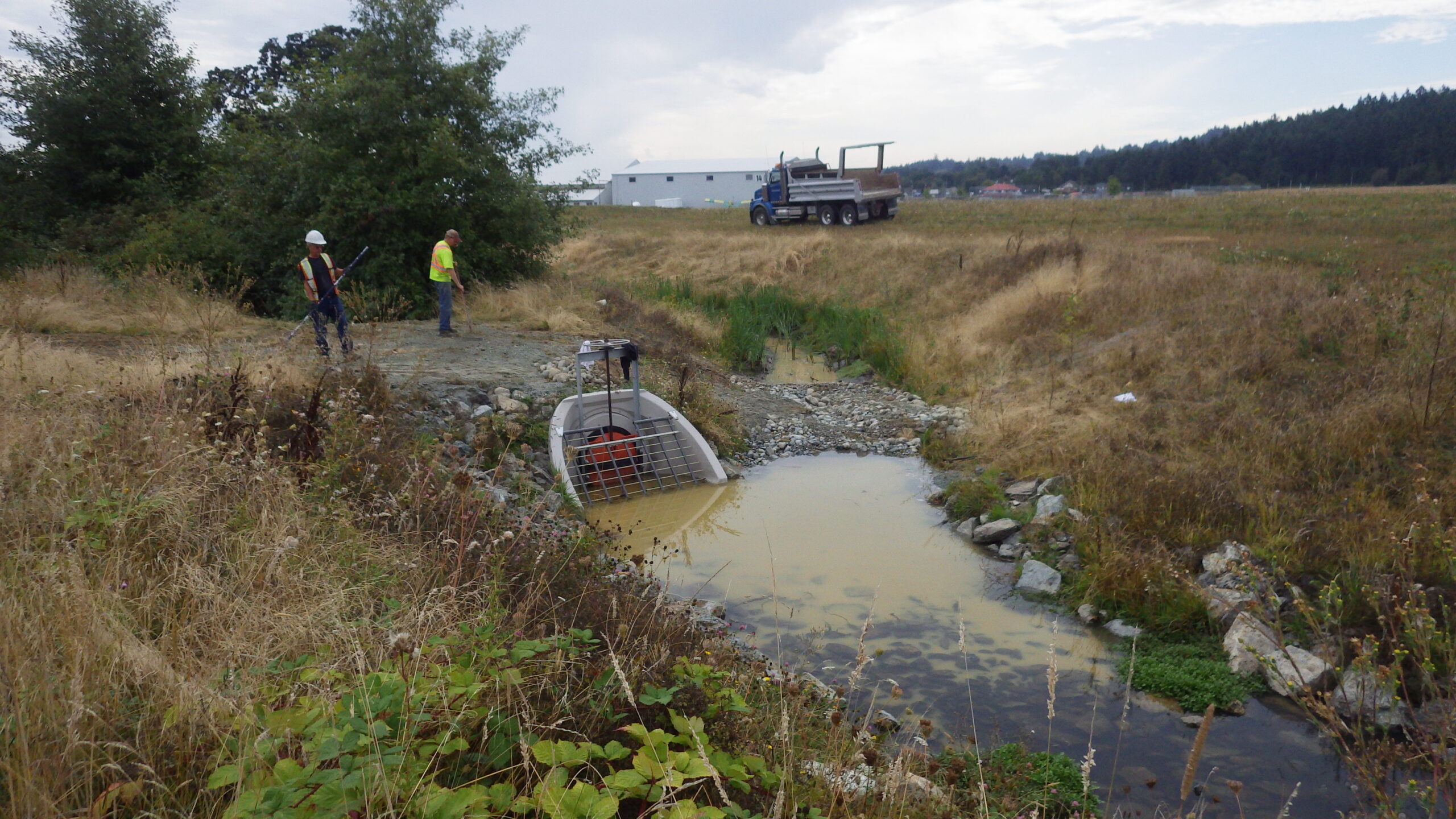
Reay Creek detention pond