
Millstream Creek
The Millstream Watershed drains a 26 km² area, from the Gowlland Range in the Highlands, through Langford, Colwood, and View Royal, before emptying into Esquimalt Harbour. Historically, salmon did not access the watershed due to a combination of natural barriers—such as waterfalls and steep gradients—and later man-made obstacles associated with urban development.
In the late 1980s, significant monitoring and assessment initiatives were undertaken by volunteers from the Goldstream Hatchery to determine if the conditions extant in the watershed were suitable to support salmon should they be introduced. Although the lower section of the creek was fairly polluted from surrounding urban development, the upper section was fed by small glacial lakes and bogs in a sparsely populated area, but remained blocked by a number of barriers. In 1993, Goldstream Hatchery received the necessary permitting to introduce the first juvenile coho salmon to Millstream Creek, and in the fall of 1995, spawning adults were seen gathering at the base of the first waterfall. Hatchery volunteers managed to trap 63 adult coho salmon and carry them over the falls to where they could spawn.
This method was used until 1998 when construction of the first concrete fishway ('ladder') began. Over the next several years, and with considerable financial assistance from the City of Langford, Goldstream Hatchery volunteers were able to construct a total of 5 fishways in the lower section of Millstream Creek, downstream of Atkins Ave. Sources of effluent along the creek were cleaned up and more coho salmon from Goldstream Hatchery were introduced in the hopes of establishing a self-sustaining population. With technical support from Fisheries and Oceans Canada, a motion-detecting camera was installed at the first fishway to record the movement of fish within the creek. As testimony to the success of this work, over 700 spawning adults returned to the 2.3 km lower section in 2016. Sea-run coastal cutthroat trout have also been observed using the fishways, taking advantage of habitat that was previously inaccessible to them.
However, an additional 8 km of high-quality habitat in the upper section of Millstream Creek remained blocked by a high culvert at Atkins Ave, near Mill Hill Regional Park in Langford.
Restoration Work
In 2016, we began to design and fundraise for a 6th fishway to eliminate the barrier to fish passage in Millstream Creek at the Atkins Ave culvert. Completed in 2020, the fishway consists of a series of 13 step-pools at progressive heights, functioning like a ladder to help fish ascend the culvert. The culvert itself was relined with concrete to extend its life, and steel baffles were installed to aid fish movement by reducing velocity and providing resting places for fish. Following major flooding events that caused damage to the fishway and adjacent areas, amendments were made to the project that focused on restoring floodplain function downstream of the fishway via overflow channels, riffle and boulder run structures to slow water flow, and riparian planting.
Continued maintenance of all the fishways is necessary to ensure their long-term success. Each year in late summer, the fishways are cleared of gravel and debris in preparation for returning salmon, and camera equipment is installed and tested to monitor fish passage. Footage of returning salmon is reviewed, and data on species, sex, size, and condition are recorded. This long-term monitoring helps evaluate fishway performance, inform adaptive management, and support subsequent restoration actions.
In 2022, in collaboration with Goldstream Hatchery, we launched a PIT (Passive Integrated Transponder) tagging program in Millstream Creek. PIT tags are small electronic microchips, each with a unique identification number, that are inserted into the body cavity of juvenile fish. When a tagged fish passes over an antenna array installed in the stream bed, its unique ID is detected and recorded, allowing us to estimate the timing and survival of out-migrating smolts and returning adults, and inform where and when re-stocked coho salmon are released within the watershed. Each year, thousands of tagged coho salmon are released into Millstream Creek upstream of the Atkins Ave fishway.
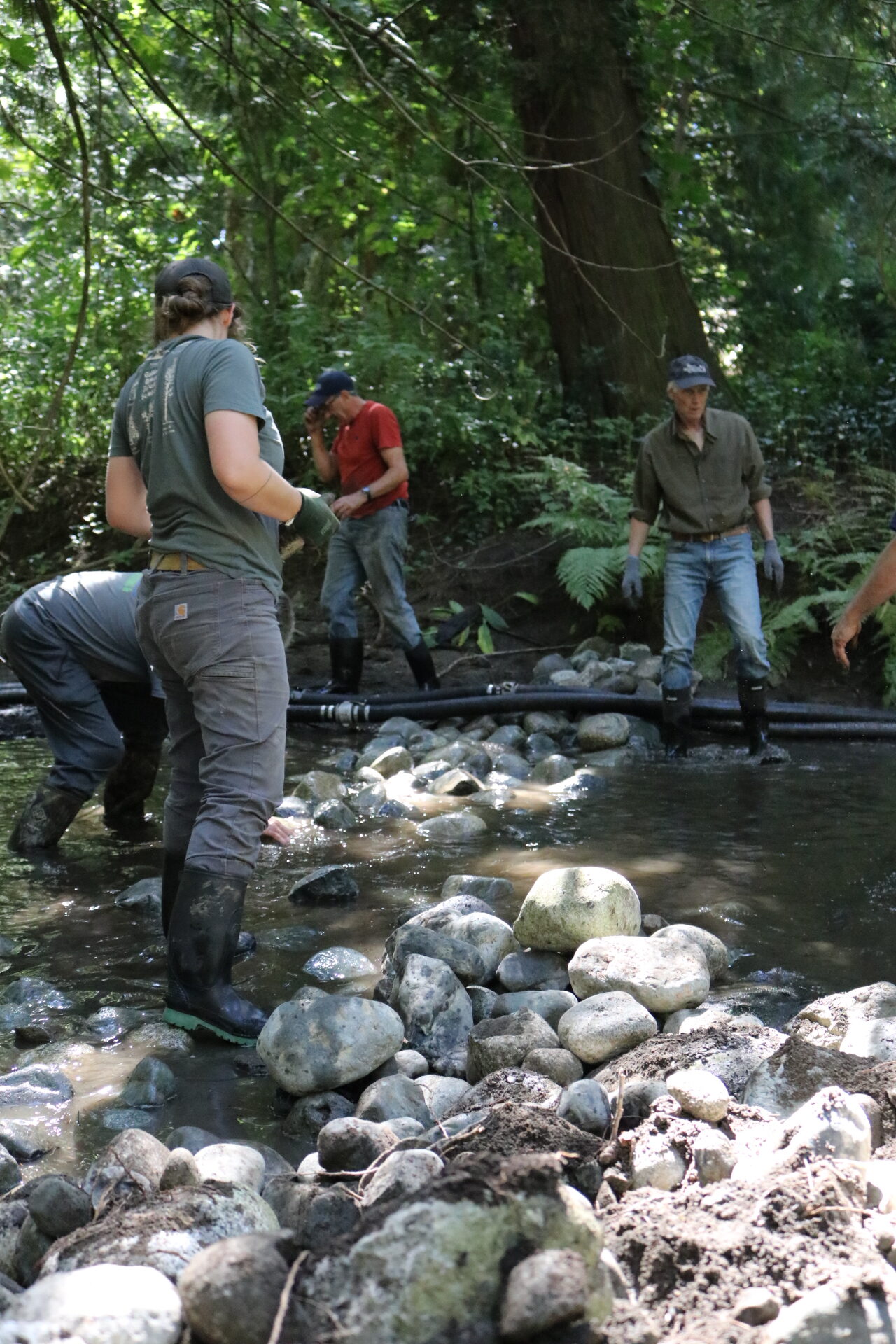
Riffle construction in Cedar Vale North Park
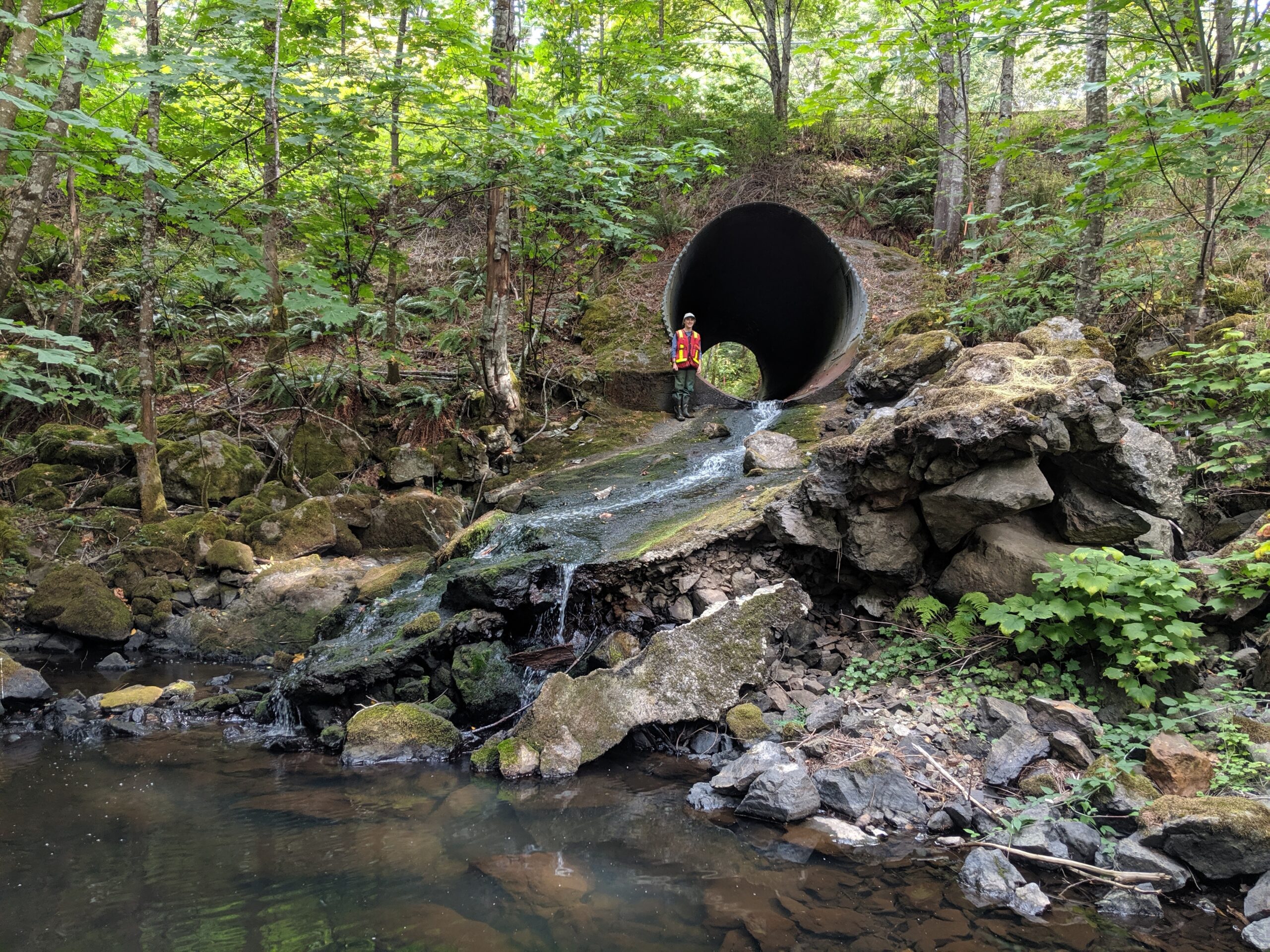
Before: A culvert inaccessible to fish
After: A new, salmon-friendly fishway
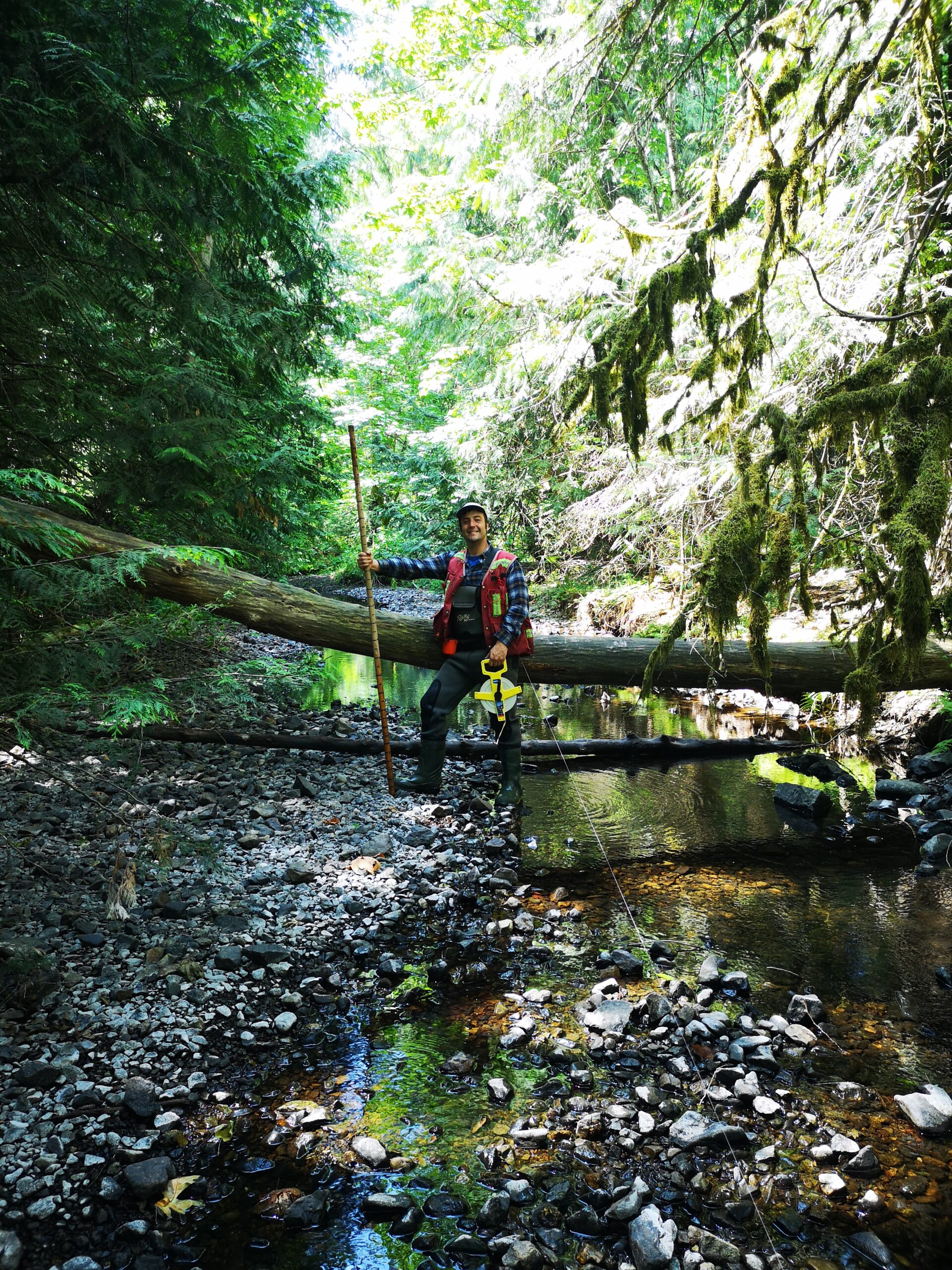
Today, Peninsula Streams & Shorelines continues to lead a range of instream and riparian restoration projects throughout the Millstream Creek Watershed to improve habitat for fish and wildlife and strengthen overall watershed resilience. This work is guided by detailed habitat assessments conducted by PSS staff and partners, which help identify priority restoration opportunities in a highly impacted urban watershed and quantify the amount and quality of fish habitat available. These assessments focus on channel structure, substrate composition, riparian condition, flow dynamics, and barriers to fish movement, and are designed to inform both immediate restoration actions and longer-term planning. To further support this work, we recently installed a hydrometric monitoring station and fish camera within the watershed, improving our understanding of flow conditions, fish passage timing, and when and where fish are spawning and utilizing the fish ladders.
Building on these assessments, PSS has undertaken hands-on instream and riparian restoration projects in partnership with the City of Langford Parks and Recreation and local stewardship groups, including the Friends of Millstream Watershed. In the summers of 2023 and 2024, a reach of Millstream Creek in Cedar Vale North Park was restored to address a lack of spawning habitat and structural complexity. Restoration work included the construction and enhancement of riffles to improve flow diversity and oxygenation, the addition of spawning gravel to support coho and coastal cutthroat trout reproduction, and the placement of habitat boulders and large woody debris to create cover, velocity refugia, and bank stabilization. Riparian restoration complemented these instream works, with native species such as red-osier dogwood and willow staked along the banks, and more than 100 western redcedar and Douglas fir trees planted throughout the riparian corridor to provide shade, improve long-term bank stability, and enhance habitat for a wide range of wildlife.