Portage Inlet Linear Park
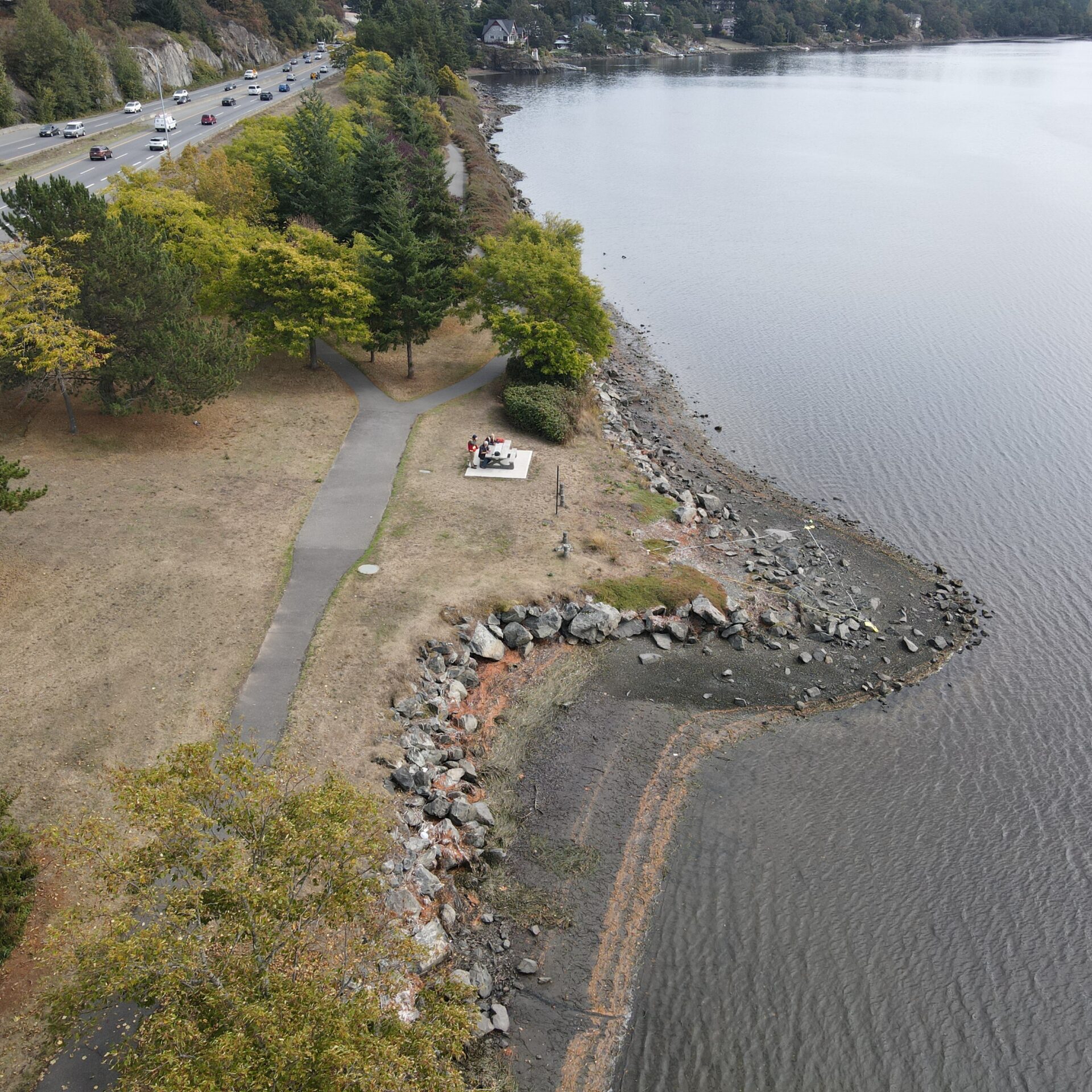
Portage Inlet Linear Park follows a stretch of shoreline along Portage Inlet in View Royal. Like many beaches throughout Greater Victoria and the Salish Sea, portions of this shoreline have been altered over time by development, including shoreline armouring and other hard infrastructure. These modifications can bury or erode natural beach sediments, disrupt the movement of sediment and nutrients along the shoreline, and reduce the ability of beaches to provide habitat for fish and other marine species.
One important consequence of shoreline hardening is the loss of suitable spawning habitat for forage fish such as surf smelt and Pacific sand lance, both of which inhabit Portage Inlet. These species spawn directly in the intertidal zone and depend on beaches with appropriately sized sand and gravel to protect and aerate their developing eggs. Where natural sediment processes are disrupted or suitable substrate is lost, the amount and quality of available spawning habitat can decline.
Forage fish are an important link in marine food webs, transferring energy from smaller organisms to larger predators, including salmon, seabirds, and marine mammals. Protecting and restoring their spawning habitat therefore benefits not only forage fish populations, but the broader coastal ecosystem.
Restoration Work
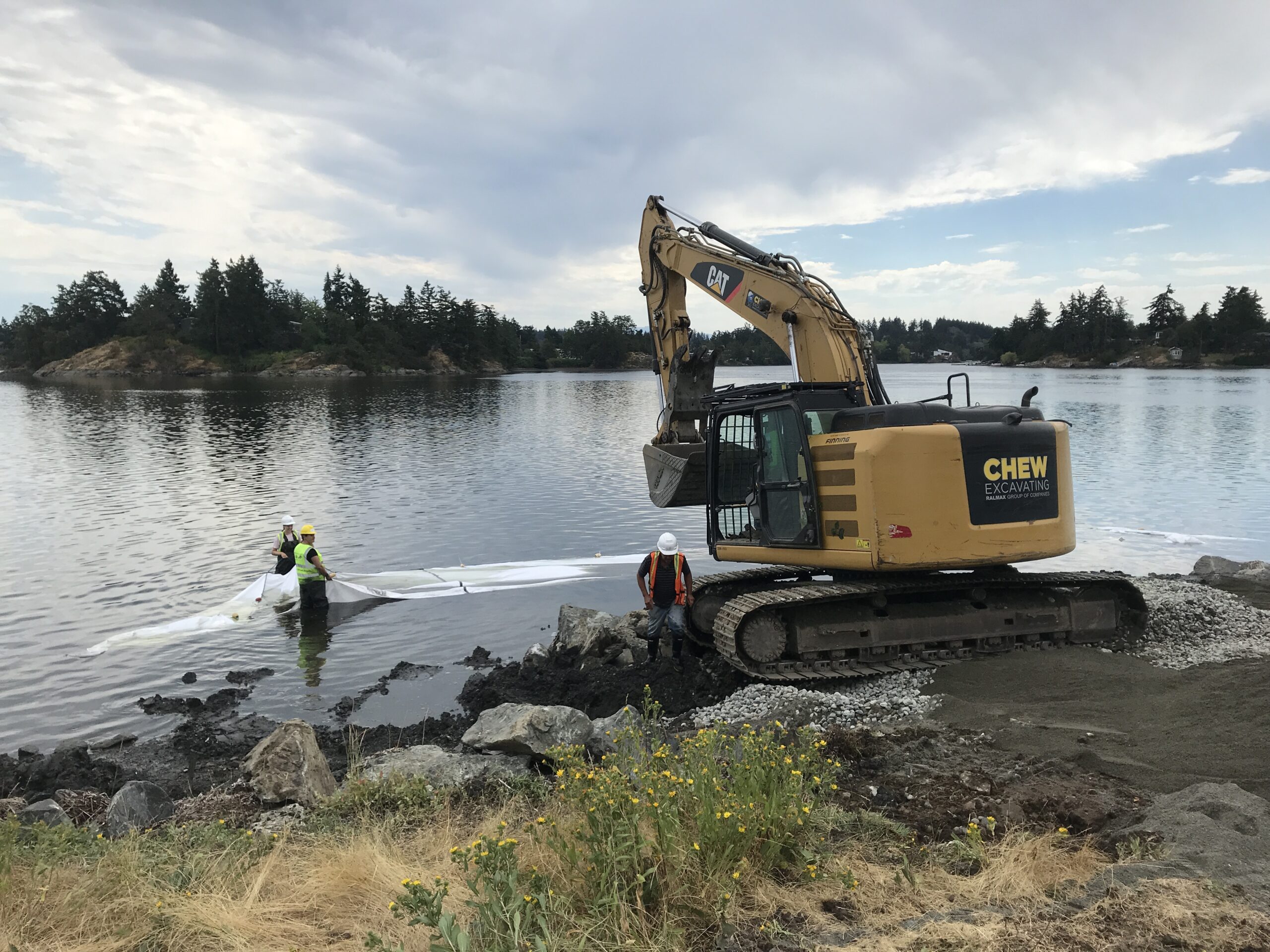
In 2022, Peninsula Streams & Shorelines (PSS) worked with the Town of View Royal and community volunteers to restore shoreline habitat at Portage Inlet Linear Park. Approximately 300 m² of beach was nourished with suitably sized sand and gravel to improve spawning conditions for forage fish along this historically productive shoreline.
Restoration also extended into the backshore, where community volunteers planted approximately 250 m² with native vegetation. These plantings help stabilize shoreline soils, reduce erosion, and improve the resilience of the shoreline over time. Large woody debris was also installed to increase habitat complexity and provide additional bank stabilization.
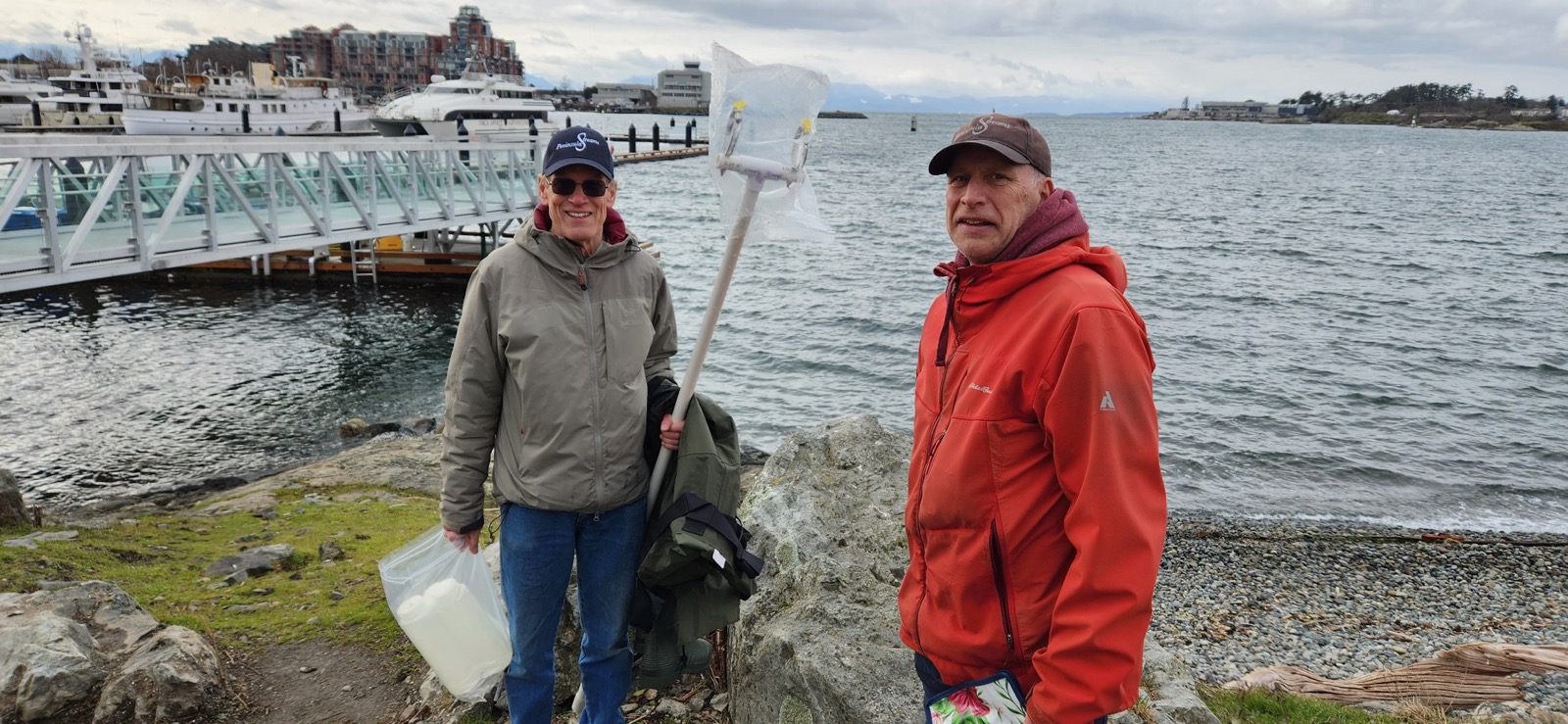
Post-restoration monitoring included environmental DNA (eDNA) monitoring in partnership with the Hakai Institute’s Integrated Coastal Observatory (ICO) from 2024-2026. As part of the program, seawater samples were collected and analyzed for traces of DNA naturally shed by fish into the surrounding environment, providing a way to detect species that may be difficult to observe through conventional surveys and to track changes in fish diversity over time.
Sampling at Portage Inlet has detected 50 fish species, highlighting the diversity of fish present within the inlet. These detections include the forage fish targeted by the restoration work—surf smelt and Pacific sand lance—as well as Pacific herring, northern anchovy, and eulachon. Salmonids detected include Chinook, coho, chum, pink, and sockeye salmon, along with cutthroat trout and Dolly Varden. A wide variety of other nearshore fishes have also been recorded, including sculpins, perches, flatfish, greenlings, pricklebacks, pipefish, and gobies. Together, these results provide a valuable baseline for understanding the biodiversity of Portage Inlet and how its fish community may change over time. Today, forage fish beach spawning surveys are conducted several times a year by community scientists to monitor the beach for spawning use.
Learn More