
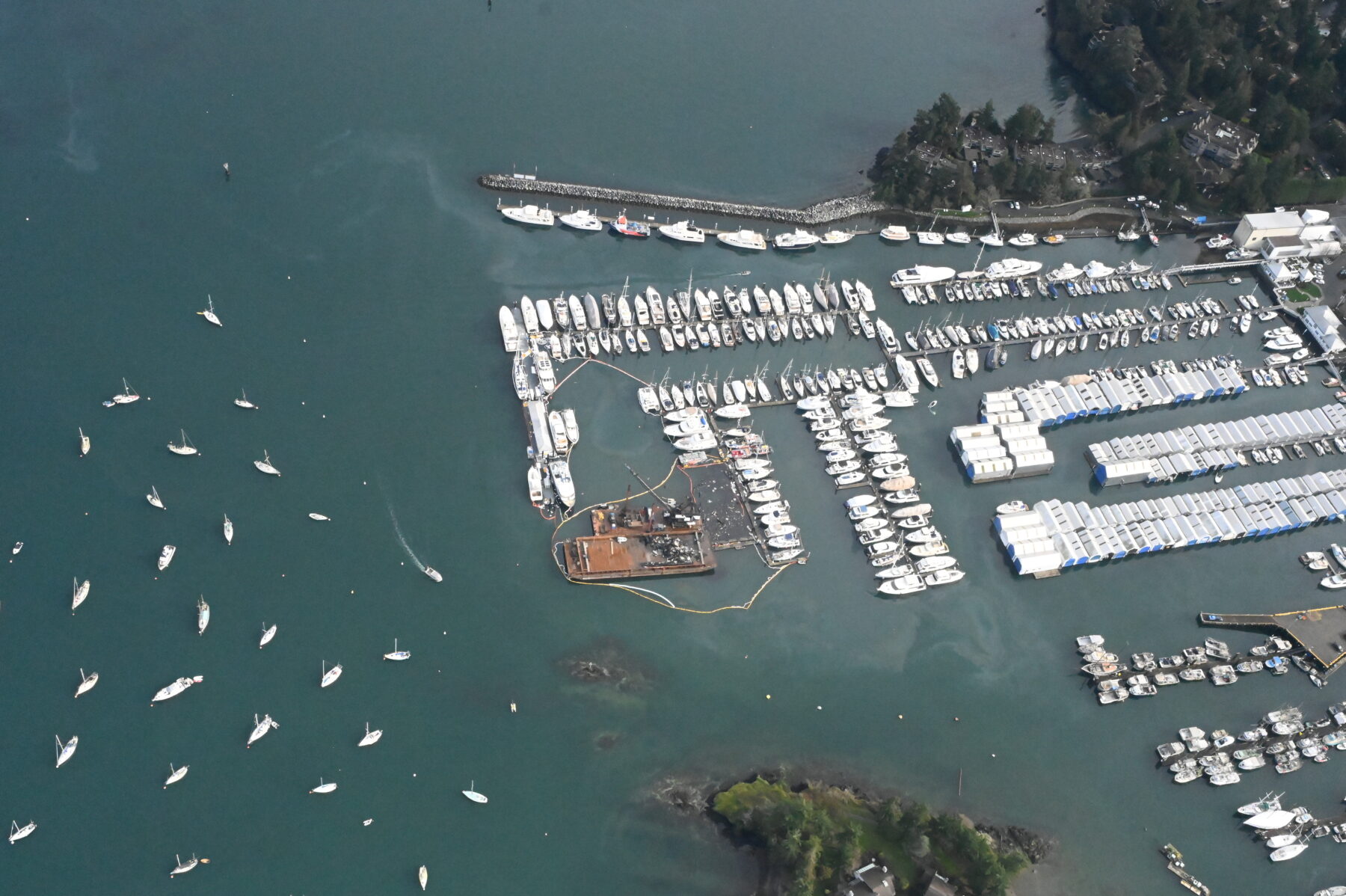
On February 1, a major fire at Van Isle Marina in Sidney destroyed three large yachts, prompting an extensive environmental cleanup after the vessels sank at their berths. While emergency crews safely contained the blaze, oil and debris spread to parts of Tryon Beach. This area is recognized as the region's most productive spawning ground for surf smelt, a forage fish species that is highly vulnerable to pollution, especially during the current peak spawning season. Government agencies and local community partners quickly coordinated to remediate the shoreline and remove trapped contaminants from the sand and gravel.
Despite these rapid recovery efforts, the ecological damage is highly concerning. A few days after the incident, PSS volunteers at nearby Breakwater Beach discovered over 3,000 mostly dead surf smelt eggs. With ongoing surveys documenting abnormal egg mortality across the harbour, this event clearly demonstrates the extreme fragility of our coastal habitats to oil spills.
We've known since the 1989 Exxon Valdez spill that oil is devastating to the eggs of forage fish. A 2021 study by John P. Incardona and colleagues showed that exposing Pacific herring eggs to just one gram of crude oil per kilogram of gravel for a single day causes significant heart swelling and growth defects. While this doesn't kill a developing herring immediately, it leaves them with a severely weakened heart. This makes finding food and dodging predators incredibly difficult later on, essentially creating a delayed struggle for survival.
So, what exactly is causing this damage? The main culprits are polycyclic aromatic hydrocarbons, or PAHs. This family of chemicals is found in crude oil, but it's also created by burning gas, diesel, wood, and even coal. While PAHs do occur naturally, the real danger happens when their concentration is elevated due to human activity. Today, we're seeing major issues not just from massive oil spills, but from everyday highway runoff. Car exhaust washes off roads and delivers a dose of PAHs strong enough to mimic the damage of a simulated oil spill. Thankfully, green infrastructure like rain gardens can act as a sponge to filter out these contaminants before they hit the ocean. Decades of research show just how sensitive these tiny eggs are, and keeping their intertidal nurseries clean is crucial for their survival.
Jake Dingwall
MSc Student, University of Victoria & Pacific Salmon Foundation
Photo from Environment and Climate Change Canada